Canadian social media fishing icon shares finesse-play tactics
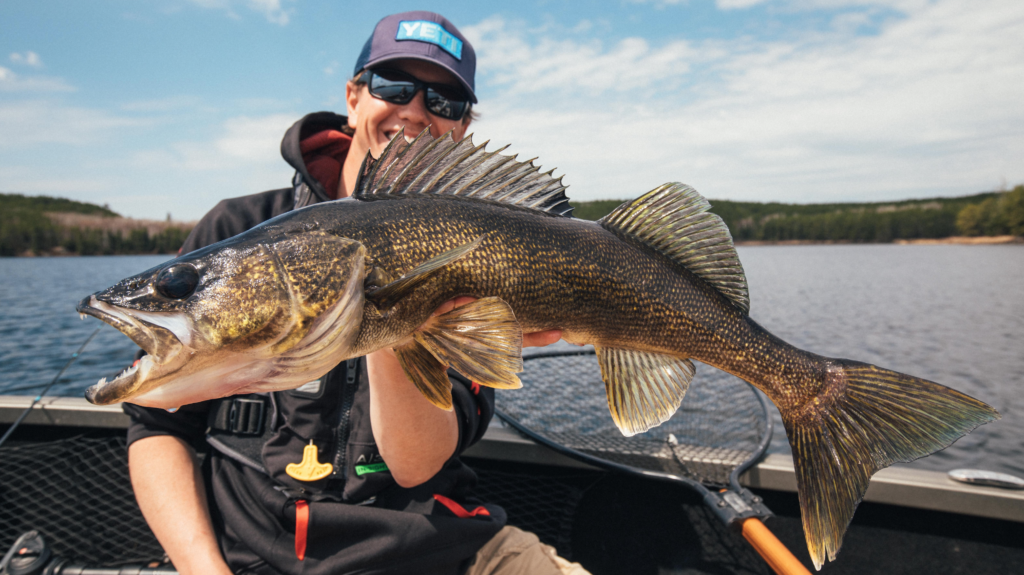
More than a decade ago we discovered an enclave of Canadian anglers with their fingers on the pulse of the coolest and craziest bites throughout Ontario, Manitoba, and Saskatchewan. The ring-leader in this whole scene was the flamboyant and entertaining, Aaron Wiebe. At the time, sis YouTube video channel, Uncut Angling, was a welcome change in the fishing video content formula. Part shock, part down-and-dirty fishing information, Wiebe was always doing something fun and out-of-the-box.
To make these videos happen, Wiebe’s fishing buddy Jay Siemens worked tirelessly behind the camera and in post-production to put out the freshest of the fresh fishing videos possible.
Years later, Siemens struck out on his own, putting himself in front of the camera. The result? More entertaining and educational videos. Without going into too much detail, let’s just say we’re big fans of both Aaron and Uncut Angling and Jay Siemens’ relatively fishing video content outlets.
Besides having a knack for creating excellent productions, both Aaron and Jay are wicked sticks pushed by a passion many of us can relate to. Of course, it doesn’t hurt that they live minutes away from some of the best bites in North America…
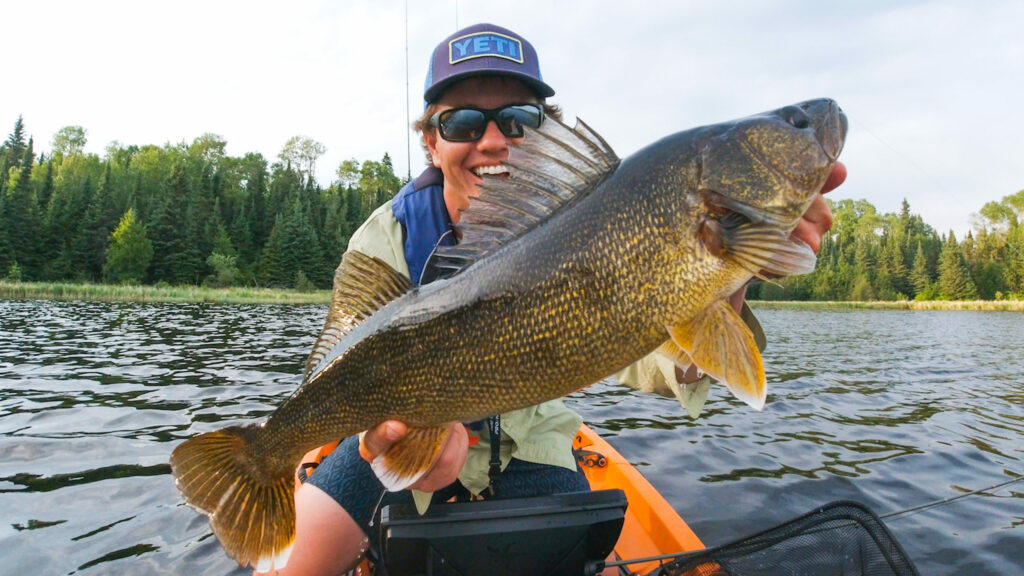
Cutting this preface short, just know that Virtual Angling jumps at the opportunity to talk with Aaron or Jay when their schedules allow it. Most recently, we chatted with Jay about walleye world’s appropriation of the drop-shotting finesse bass fishing tactic.
VA: When did you start drop-shotting for walleyes?
Jay: I’ve been drop-shotting walleyes for a few years now. Probably the first time I started drop-shotting walleyes was when I was fishing for greenbacks on the Red River in the fall and you’d sometimes catch fish suspended a little higher off bottom, as well as when they were beliied into bottom. What I would do is put an octopus hook above my 3/8-ounce jig and it was essentially two hooks at once; you could catch fish on the bottom jig but also those suspended fish. I started doing it there.
VA: When did the technique starting paying dividends for you?
Jay: Over the past couple of year watching enough walleyes reject traditional presentations, I realized how the biggest walleyes can be the fussiest, so I started playing with drop-shotting when I could see the fish on my screen. Drop-shotting is just one of those presentations that gets down fast—which is important if you’re marking individual fish—which allows you to hang the bait right in front of their face. With a lot of other techniques you don’t get the chance to do that. You drop a jig down and the big fish might eat it off the bottom, but you have to give it some kind of movement to pull it away from the fish. With the drop-shot, you can just shake it and you’re right in the fish’s face. After watching big walleye behavior on forward-facing sonar, I knew there was definitely something to drop-shotting walleyes. Even with a Lindy Rig, you just don’t have that level of accuracy.
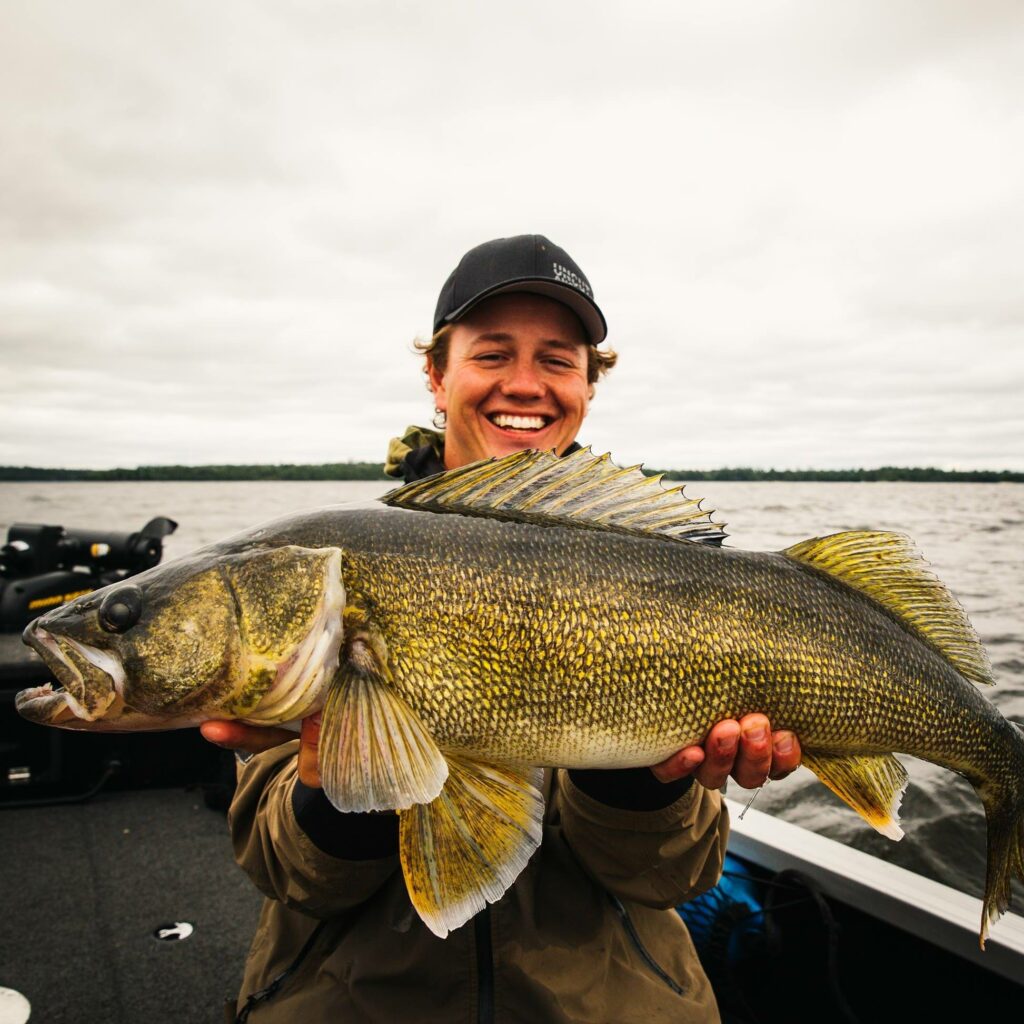
VA: What is your walleye drop-shot set-up?
Jay: Most of the time I’m using a 10- to 12-inch drop-shot leader, although you can go shorter. The big thing is keeping in mind the length from your hook to the weight when you’re casting because you’re at a 45-degree angle. Sometimes when you’re fishing vertically you can go to a shorter dropper, but when you’re casting it needs to be longer. But the longer the drop shot leader, the harder they are to cast. Most of the time I’m fishing right around a 2-foot leader. If the fish are suspended up higher than that, I’ll use a slip-float rig.
VA: What’s you go-to walleye drop-shot rod, reel, and line combo?
Jay: If I’m pitching or casting drop-shots, I prefer a 7-foot plus rod for the distance. I really like the same 7’6” medium-light power rod that I use for fishing small marabou hair jigs for smallies. In terms of line, I go lighter than a lot of anglers. I’m generally fishing 5-pound braid and a 7-pound fluoro leader. If I’m targeting really big fish—or there are lots of pike around—I’ll beef up to 10-pound braid and a 12-pound fluoro leader. But the 5-pound braid and 7-pound leader is perfect on the finesse side of things.
VA: Talking drop-shot presentations, what are your picks for live- and artificial baits?
Jay: I don’t go out on the water without a tub of Gulp! 3-inch Minnows. It’s a safety. Gulp! Leeches also work great. Still, I don’t think there’s anything better than drop-shotting a live leech for walleyes. It’s pretty tough for a walleye to resist that. I find that live minnows fall a little slower. A leech can swim freely on a drop shot, while a minnow is a little more limited. So, my go-to would be a live leech, for sure.
VA: Are there any specific hooks you like for drop-shotting ‘eyes?
Jay: 90% of the time I’m using a #6 or #4 Gamakatsu Octopus hook or one of their special G-Finesse drop shot hooks with the pinch swivel for quickly attaching dropper weight leaders. Most of the time I’m using a double-uni knot. I fold the line over itself and tie a double-uni – and this is the most important part—a trick from the late, great pro bass angler Aaron Martens—is he would take that long tag end and pass it back down through the hook eyelet. That creates a hook that stands out perfectly. He was one of the greatest drop-shotters that ever lived. Whatever knot he was using was the knot I decided to use for drop-shotting. You also don’t need a specific drop shot hook if you use that knot and pass the tag end back through.
VA: Seems like there’s an endless variety of drop-shot weights available. What do you use?
Jay: There’s definitely an argument with weights. I know a lot of guys who say don’t use clip-on weights because you lose weights whenever you get snagged. I’m fine losing my weights. I don’t want to have to re-tie my whole rig if I get snagged. I pour my own cylinder-style drop-shot weights. With a mold you can pour 50 or 60 weights in an hour and you’re set. For me, I’d rather pop off more weights. If you’re on a bite or in a tourney, having to re-tie the whole rig is a huge time waste.
AV: What kind of cadence are you using?
Jay: On sunny, calm days—really difficult conditions—the deal-breaker is fishing a drop-shot as slow as humanly possible. I feel like power corking is a little tough because it takes longer for the bait to get down into the zone when fish are moving. It’s not as accurate. With a drop-shot you can get right in front of them immediately.
AV: Any other thoughts on drop-shotting walleyes?
Jay: I fish with anglers of all skill levels. So, if I’m fishing with someone who has a tough time feeling bottom and feeling fish, I hand that client a drop-shot. There isn’t that learning curve like you experience learning how to jig for walleyes successfully. It’s so much easier to track bottom with a drop-shot than a jig. You can oversize their weights and that extra clunking on the bottom is also probably going to bring in fish to investigate. The bite is pretty sharp. It’s direct. It’s a great way to help new anglers how to distinguish bites and simply catch more walleyes. I know a lot of walleye guides are moving in this direction.
Learn more about drop-shotting walleye here:
- Learn This Best Kept Secret Technique for Walleye: Drop-Shotting
- 2 Drop-Shot Tips for Catching More Summer Walleye