It’s been a tough spring for river anglers. Mississippi River pools from the Twin Cities down through the Iowa border and beyond have experienced record water levels. Just in Minneapolis/St. Paul, water levels reached nearly 18 feet, some six feet above flood state—the highest water levels in 20 years or more.
A week ago it wasn’t uncommon to see entire trees floating down the river and Lock & Dam 2 at the old Ford Plant looked like Niagara Falls. Parks were closed, ramps and marinas were well underwater, and farther downstream, resorts like Everts outside Hager City on Pool 4 struggled to keep water from destroying cabins.
As of today, Tuesday, May 2nd, the Mississippi is down to 12 feet but there’s still some ice on lakes in northern Minnesota so that level could increase again, depending on how the water is managed. Hard to tell.
Suffice to say, this spring has had a lot of river rats discouraged, our staff included. The spawn is behind us now and we missed most of the good bite immediately preceding.
That begs the question: Once the water does fall and you can safely get on the river to fish, what’s the best plan?
Depending on water clarity and temperature, here are a few suggestions:
Post-Flood, Post-Spawn Mississippi River Walleye Presentations
Most of your early-spring ways to catch walleyes should work again post-flood with a couple extra presentations thrown in for increasing water temps.
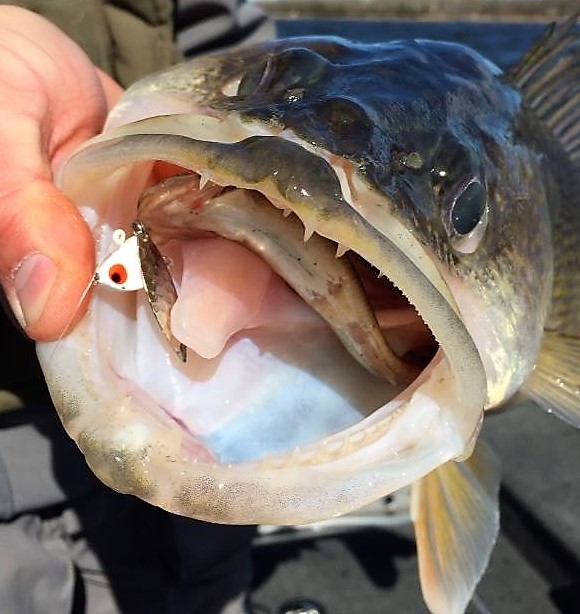
1) Jig and minnow
First, it’s hard to beat a simple jig head and minnow. A short-shank is ideal for hooking fatheads, and we like to use a stinger hook, too, to pin those short-biters. Northland Fireballs are alos hard to beat, but there are a million jigs that will catch fish, and a lot of our buddies pour their own.
Especially in dirty, post-flood waters, a lot of guys prefer to sit right on top of fish and work a simple lift-and-drop routine—even bang the bottom with heavier-than-average jigs. 81-year-old guide Dick “The Griz” Gryzwinski has caught more walleyes in his lifetime than anybody and still works walleyes this way 99% of the time on Pools 2 through 4.
BTW, if you’ve never fished with The Griz, it’s just something you’ve gotta do. He’ll put you on fish and the stories alone are worth the modest day guide fee.
Back to vertical jigging. The key is to maintain contact with bottom and limit your movements to small pops only a few inches off the bottom. You want the walleyes to feel and smell the bait because given low water visibility in most early-season river scenarios, walleyes are not sight-feeding.
No matter what weight jig you fish, if the walleyes are short-biting and you’re missing lots of fish—or your minnows are coming up bitten in half—add an inexpensive stinger hook to the rig. That typically stops the short-biting issue and will put more fish in the livewell.
Another way to fish a jig and minnow is to make short pitches into eddies, pools, and along current seams, as well as shoreline changes in rip-rap, along wing dams, and in gnarly wood.
Rule of thumb? Only use enough jig weight so you can feel bottom, which could mean anything from 1/8-ounce up shallow to 3/8- or ½-ounce in deeper holes and stronger current. 3/16-ounce (where you can find ‘em) is a magic jig weight more companies should make.
2) Split-shot Rig
When fish go slow on a jig and minnow it may be time to turn to a simple split-shot rig. All you need is a leader of fluorocarbon (breaks off easier than monofilament or straight braid if snagged) attached to your mainline, a split-shot(s) just heavy enough to reach bottom, your favorite live bait hook, and a minnow. Some anglers will add a green or pink chartreuse glow bead just above the hook for added appeal.
How far should you set your split-shot from the hook and minnow? Experts typically match the leader-to-sinker length to match water clarity, spacing wider in clear water and the opposite in murk.
There are a couple of ways to fish a split-shot rig. First, you can cast it to a current break and let the current move it around on and off bottom – or, you can fish a heavier split shot and just let the minnow sit in one spot just off current, often the ticket for extremely finicky fish.
If you’re fishing a rocky bottom and getting snagged frequently, take a page from the steelheaders’ handbook and use three or four smaller split-shot spaced evenly along your leader. This will reduce snags.
3) Short Drop-Shot
If the split-shot rig fails to produce, walleye tournament pro Jason Przekurat fishes a short dropshot rig, typically on 10-pound braided main-line attached to 10-pound fluorocarbon.
When it comes to sinkers, bell-shaped dropshot sinkers or a couple (or a few) of the heaviest split-shots you can find are a good choice. You’ll want to experiment with ¼- through an ounce depending on the depth and current speed. Bell-shaped dropshot sinkers aren’t as prone to getting snagged in rock crevices as cylindrical drop-shot weights are. And using split-shots is an inexpensive way to get the job done, too. Snagged split-shots slide off with a little force and are easily replaced.
“First, you want your dropper as close to the bottom as possible. That’s where the walleyes are. My general rule of thumb is to match my dropper-length to the amount of water visibility. Let’s say you have 4-inches of water visibility; then I’m going to run 4-inches of line between the drop-shot weight and the hook,” says Przekurat.
“Number two, I strictly use live bait—typically, that’s nose-hooking a fathead. The technique is not much different than throwing out a split-shot and a hook. But with a dropshot, the minnow is stuck in one spot if you don’t move that weight,” adds Przekurat.
“During early-spring cold water conditions there have been days when fishing a drop-shot was the only way you were going to get bit. What I like to do is have just enough weight to let the current move it around a little bit in the current seam. Occasionally, the rig might shift down to another rock but staying put is critical so I opt for heavier dropshot weights. It’s not something you want to work fast. It’s a deadstick technique. As the water warms up and walleyes get into post-spawn, you can work the same technique with soft-plastics, but early in the season there’s really no substitute for live bait.”
4) Bait-Feeder Deadsticking
One way we’ve been fishing river walleyes over the past couple years is by fishing them like catfish. What we mean by that is adopting a “set it and forget it” deadstick approach. For waters where two lines or more are allowed, it makes a great second rod approach while casting or jigging with another stick.
At the business end is a simple snell – a 10-inch to two-foot 10-pound fluorocarbon leader to a live bait hook and then your bait of choice—tied at the opposite end to a barrel swivel with a bead and egg sinker above. We’re talking a basic Lindy or live bait rig.
The key is using a baitfeeder reel—something saltwater and catfish anglers have been using for years—yet are only gaining popularity with walleye and ice anglers.
The beauty of a baitfeeder spinning reel is you a have a switch with secondary drag that you can dial in so a walleye can take your bait without any resistance once they grab the bait. When ready to set the hook you simply flip the switch and the primary drag kicks in.
Whether you’re watching your line, rod tip, or attaching a small tip-up bell (or a rod-tip light at night), or simply check in on your line from time to time, it’s a great way to soak bait, let that minnow do its thing—and a lot of times—catch fish when other methods fail. You can set your rod against the boat gunnel, in a rod holder, or, if fishing from shore, on top of a five-gallon bucket.
We’ve had good luck with big creek chubs, suckers, and willowcats with this approach while casting other presentations.
5) Soft Plastics Up Shallow
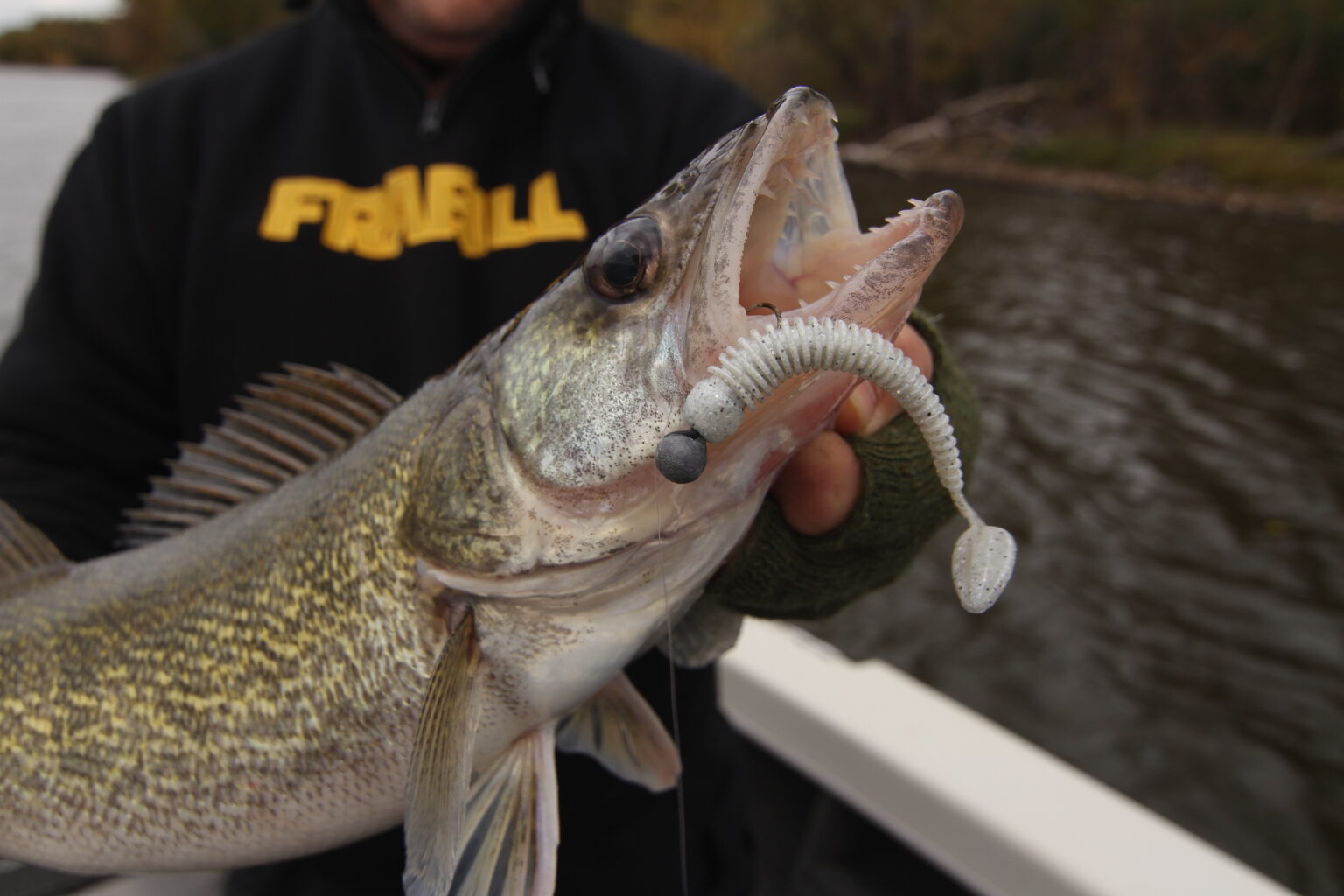
Especially in stained water, river walleyes often prefer the added bulk and vibration of a soft plastic to live bait. Time-tested baits include Moxis, ringworms, twister-tails, paddletails, etc. Depending on the bite, you can catch walleyes on plastics doing everything from a slow drag to a quick rip or snap routine. Experiment and see what they want.
6) Blade Baits
Walleye pro Max Wilson says the bladebait bite is best when the water temps are 55 or below. While that may be true, don’t put them away for the warm-weather season. You can catch walleyes on blades year ‘round.
If you’re marking fish directly below the boat in low-vis waters you can vertically jig blades, ripping them a foot or so off the bottom and letting them fall back down on a tight line. Otherwise it’s a pitching game—and adjust your bladebait size to the water depth, fishing lighter to heavier metal as water depth dictates.
7) Three-Way Stickbait Rigs
Generally fished by river rats when the water temp is in the mid-30s to mid-40s during mid-winter and early-spring, a three-way stickbait rig will also catch river walleyes all year long.
On Minnesota waters you’re limited to fishing one bait off a lead behind a three-way swivel with a dropper weight to maintain contact with the bottom while slowly trolling upstream, downstream, or anchored in position if the current is sufficient.
In terms of the dropper, a half-foot to two-foot leader generally puts you in the strike-zone, with a trailering stickbait on a two- to five-foot leader—sometimes even longer.
In other states—like Wisconsin—you can actually run two stickbaits off your leader, attaching the second in line to the last split ring (treble hook removed) of a Rapala #7 or #9 minnow-style lure—or your stickbait of choice.