We look forward to this time of year each season—that period between ice-out and the spring crappie spawn, the latter which typically happens when the water temp hits 60-65 degrees. Old-timers used to watch for lilacs to bloom to signal the full-on springtime crappie spawn bite.
Conditions Right Now
Right now the water’s still cold throughout much of the Upper Midwest, which has crappies staging between deeper basins and their shallow spawning locations. In Northern Minnesota, ice is still present in some areas and the water temp was 39 degrees this past weekend. Many crappies are still deep, but that could change quickly as warmer weather is forecasted toward the end-of-week.
Farther south in Minnesota, crappies have been biting in shallow bays already—over the 8-15 foot weed flats between basins, deeper wintering holes, and those shallow 6 feet and under spawning zones—areas of scattered bulrushes, reeds, and cattails.
Not sure what bays to try? Focus your efforts on northern, northwestern, and northeastern ends and off-shoots of the main lake, the first areas to warm up.
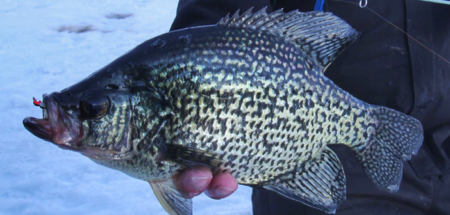
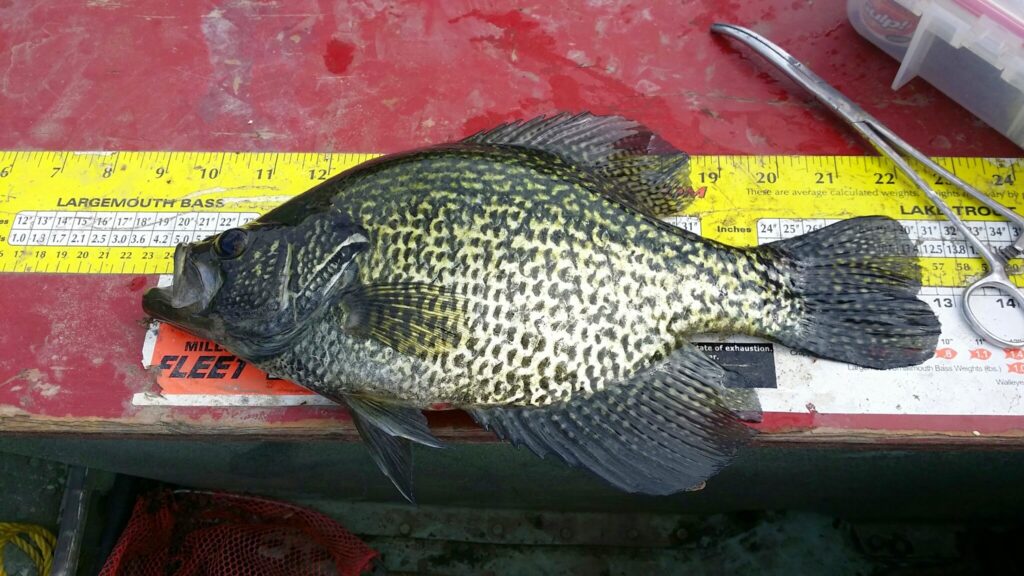
We’ve already caught some fish in Lake Minnetonka’s bays but the fish are moving shallower and deeper on a daily basis, all dependent on the temperature. Water temps in Lake Minnetonka bays have been fluctuating between 45 and 52 degrees. Most fish have been in that 8-11 inch class with a few larger fish here and there, including the 15 ½ incher in the photo below, caught by the son of one of our fishing buddies.
Cold Water Crappies: Finesse Can Be Key
Thing about cold water is the fish aren’t very aggressive…
So, while the temptation is to cover water with a micro-crank or Road Runner/Northland-style Thumper underspin and curly tail or ol’ Beetle Spin type lure to locate fish—or use forward-facing sonar if you have it—one of the best methods to find and catch colder temp, early spring crappies is with a simple float and crappie minnow or soft plastic rig—fan-casting areas and slowly working the rig back to the boat 6-inches to a foot at a time.
Our experience shows that colder water crappies just moving into bays don’t chase much; they like the bait presented with some amount of finesse.
Sounds simple, right? Not so fast.
While we fished plenty of the old clip-on red and white, round bobbers as a kid, today’s float fishing options offer a lot more than in the days of old.
Fixed Floats vs. Slip Floats (and Bobbers That Do Both)
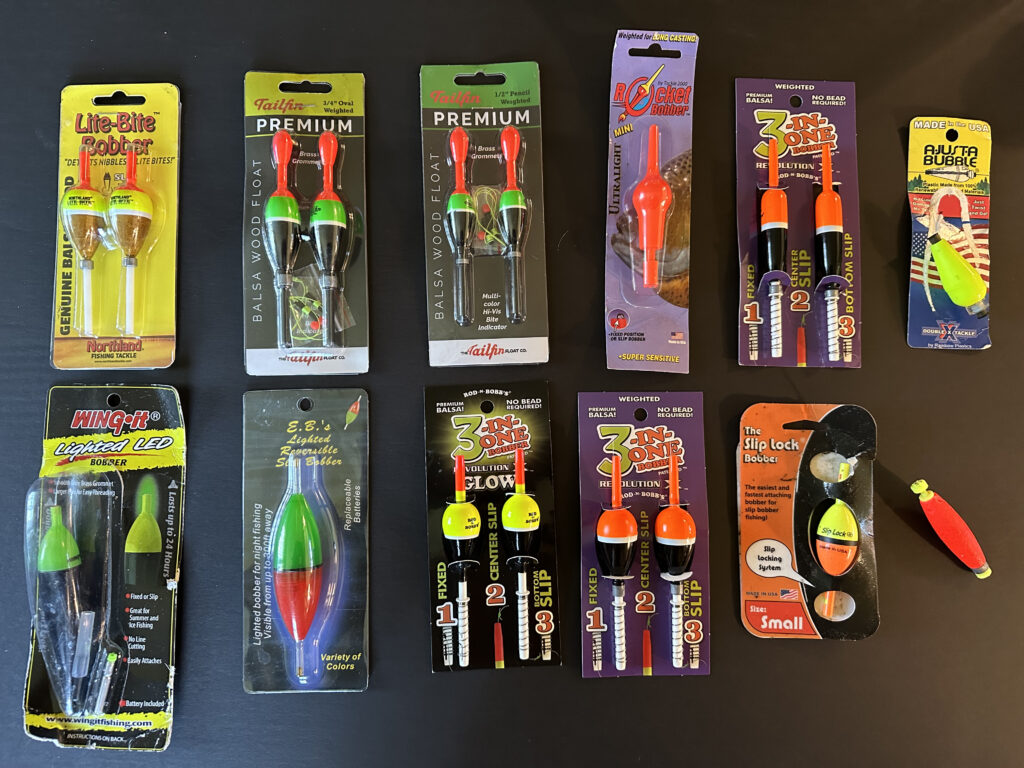
There are two directions you can go when it comes to bobbers for springtime crappies: a fixed float or slip float—and you used to have to pick one or the other. Nowadays, there are several luremakers making floats that will function as both a fixed float or slip bobber, which is pretty convenient.
Generally, if the fish are deeper than five feet or so, we’ll use a slip float. If crappies are shallower than five or six feet—or the length of the rod you’re using—a fixed float works great. As mentioned, these days we’re using floats that function as both—as a slip bobber or fixed float as needed.
Weighted vs. Unweighted Floats
99% of the time we prefer weighted floats to unweighted floats. First, they cast farther, and secondly, they sit down in the water a little farther, creating less resistance when a negative to neutral fish pulls at your plastic, minnow, or combination of the two. Lastly, you don’t generally need to add split shot to your leader if using a tungsten jig head when pinned below a weighted-float.
One float we really like is called the Adjust-A-Bubble – made in the U.S.A., the Adjust-A-Bubble float popularized by steeheaders, and then adopted by smallmouth anglers to present small marabou jigs to wary cold-water smallmouth bass.
In a nutshell, you can unscrew the Adjust-A-Bubble and a little bit of water to adjust the buoyancy and the weight of the bobber. Second thing is there are no metal clips to potentially fray your line. Your line goes straight through the float like a slip bobber and then you wrap an internal rubber band around your line to keep the float in place. Pretty slick. Adding a little bit of water inside the bobber creates a nice heavy float for far casts and if used with a tungsten jig head and plastic or minnow, you don’t need to add any split shot.
The 3/16 Adjust-A-Bubble in bright yellow or pink is a super-visible and far-casting float for crappie fishing.
What To Fish Below the Float
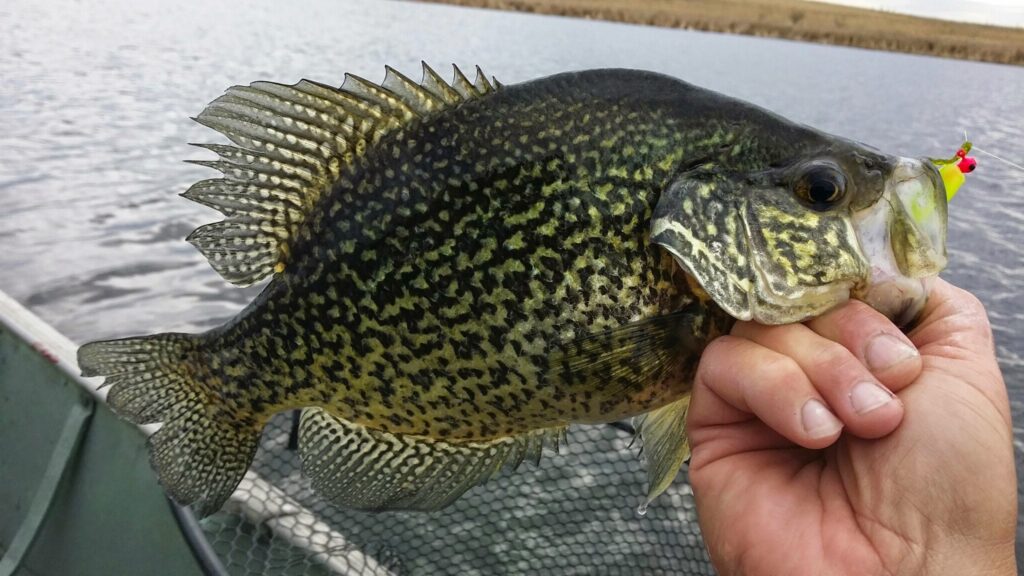
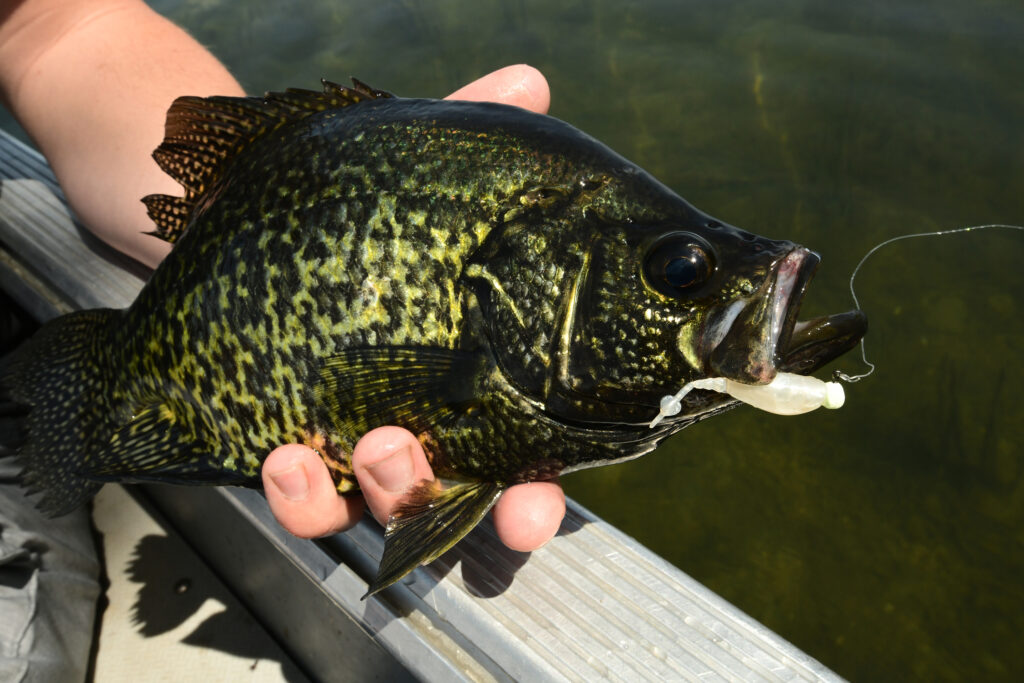
When it comes to the business end of a springtime crappie bobber rig, we alternate between a jighead and plastic; micro hair jig; jighead and minnow; or a jighead, plastic, and minnow combo. You can also add a small split shot and dorsal fin-hook a small crappie minnow with an Aberdeen-style or Tru-Turn hook if the fish are really finicky.
Every lake is different, but micro-tubes, GULP!, and small twister tails are hard to beat. Really, there’s an endless supply of micro-plastics out there today and most of them will probably catch fish in spring. Chances are you’ve got everything you need in your ice fishing box without having to shell out more cash.
Two colors we always keep on cue are pink and black with a chartreuse tail. Sometimes even finicky crappies will eat a small plastic presented under a float. Other times, adding a small crappie minnow is key. And don’t forget about re-purposing ice fishing jigs like horizontal-sitting Northland Tungsten Mud Bugs or vertical-oriented Demons. Both can work wonders.
Rod, Reel, and Line Set-Up
For most crappie fishing we like a 6 ½ to 7 foot ultra-light spinning rod, 1000-size reel, and lately, we’ve switched to 6-pound nano-style braid tied to a 12-inch to 2-foot 3- to 4-pound fluorocarbon or monofilament leader for ultra-far casts, which is often key.
You don’t want to sit right on top of the crappies. Some distance between the boat and the fish is always a good idea – and use the wind to your advantage to let the float rig drift through a large area, which will also give you a good idea of where the crappies are clustered.
Adding a small barrel swivel is a good idea any time you use a slip or fixed float rig as it prevents the jig from spinning which creates an unnatural presentation.
Wrap-Up
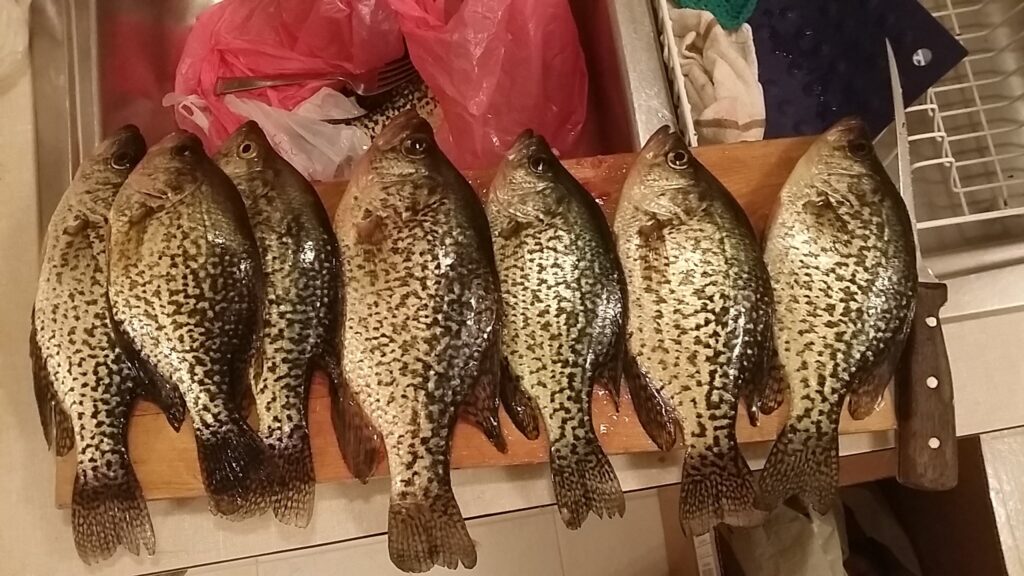
We wish the spring crappie bite lasted longer than it does. Kind of like deer camp in November or pre-spawn walleyes on the river come early spring, it’s annual rite that just can’t be missed…