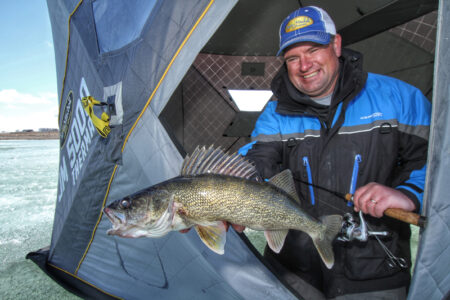
Stevens Point, Wisconsin-based winning tournament walleye angler, Jason Przekurat, cut his teeth on all-season river walleye fishing. Suffice to say, he knows a thing or two about catching river ‘eyes no matter the condition—from cold water to warm water; from low, clear flow to high, muddy flows.
Przekurat says most people have no idea how much bass fishing he does when he’s not competing on the trails.
“When a walleye tournament is over I don’t go ‘fun fishing’ for walleyes. I pretty much strictly fish walleyes during tournaments. When I’m fishing at home I’m out with my son fishing bass,” says the elder Przekurat.
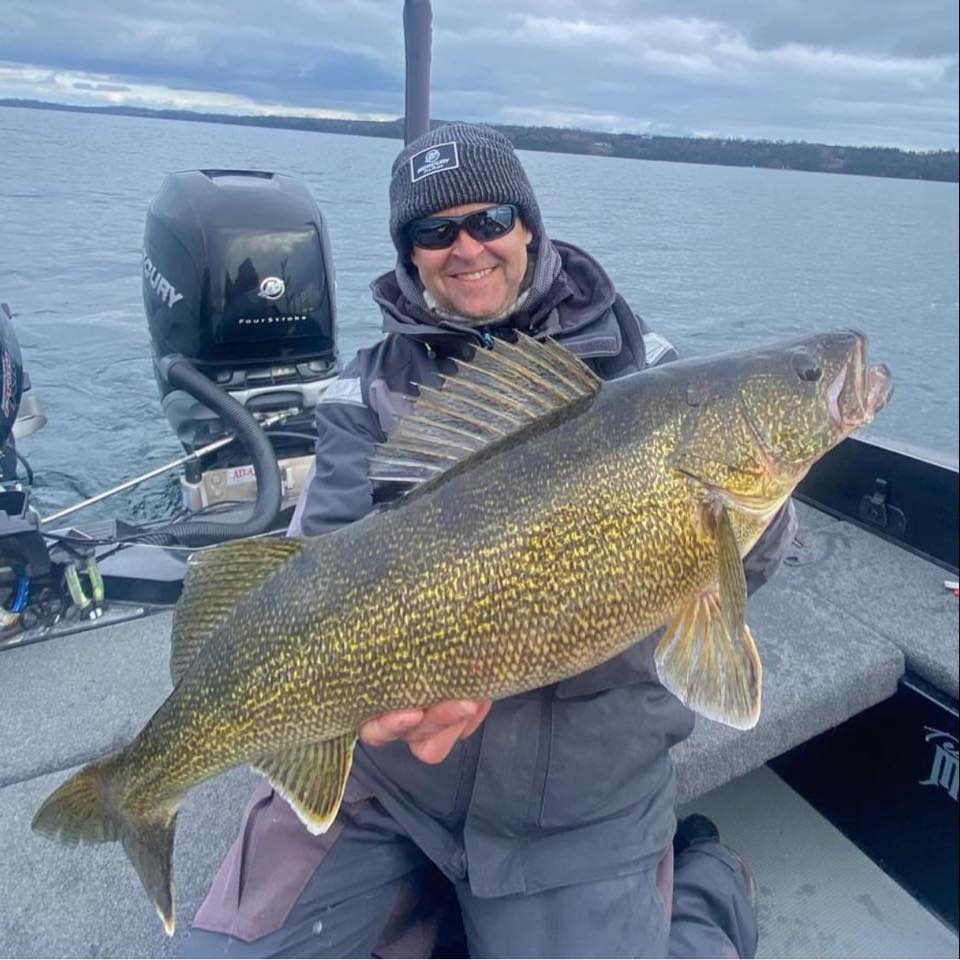
It should be noted that last year Jason’s son, 23-year-old Jay Przekurat, was the youngest ever competitor to win a Bassmaster Elite event, in his case top honors at the Guaranteed Rate Bassmaster Elite tournament on the St. Lawrence River. It was on those waters that Jay also weighed the heaviest four-day bag of smallmouth bass ever weighed in a Bassmaster Elite event—a whopping 102-9.
His winning tactic? Drop-shotting, something the father and son have nearly refined for catching difficult green and brown bass—but also implement on walleyes, too.
Drop-Shotting Muddy, Early-Season River Flows
Based on the Wisconsin River system, the elder Przekurat has spent countless hours tweaking his river walleye game. He says that early-season, pre-spawn walleyes on rivers, instead of fishing a standard jig and minnow, dead-sticking, or using a simple split-shot, hook, and minnow, a drop-shot can really pay huge dividends.
“The water is stained from snow melt and you’re not dealing with classic drop-shot conditions,” says Przekurat.
“First, you need to have your dropper as close to the bottom as possible. My general rule of thumb is to match my dropper-length to the amount of water visibility. Let’s say you have 4-inches of water visibility; I’m probably going to run 4-inches of line between the drop-shot weight and the hook.”
Przekurat continues: “Number two, I strictly use live bait—typically, that’s nose-hooking a fathead. The technique is not much different than throwing out a split-shot and a hook. But with a dropshot, the minnow is stuck in one spot as long as you don’t move that weight. During early-spring cold water conditions there have been days when fishing a drop-shot was the only way you were going to get bit. What I like to do is have just enough weight to let the current move it around a little bit in the current seam. Occasionally the rig might shift down to another rock but staying put is critical so I opt for heavier drop-shot weights. It’s not something you want to work fast. It’s a deadstick technique. As the water warms up and walleyes get into post-spawn you can work the same technique with soft-plastics but early in the season there’s really no substitute for live bait.”
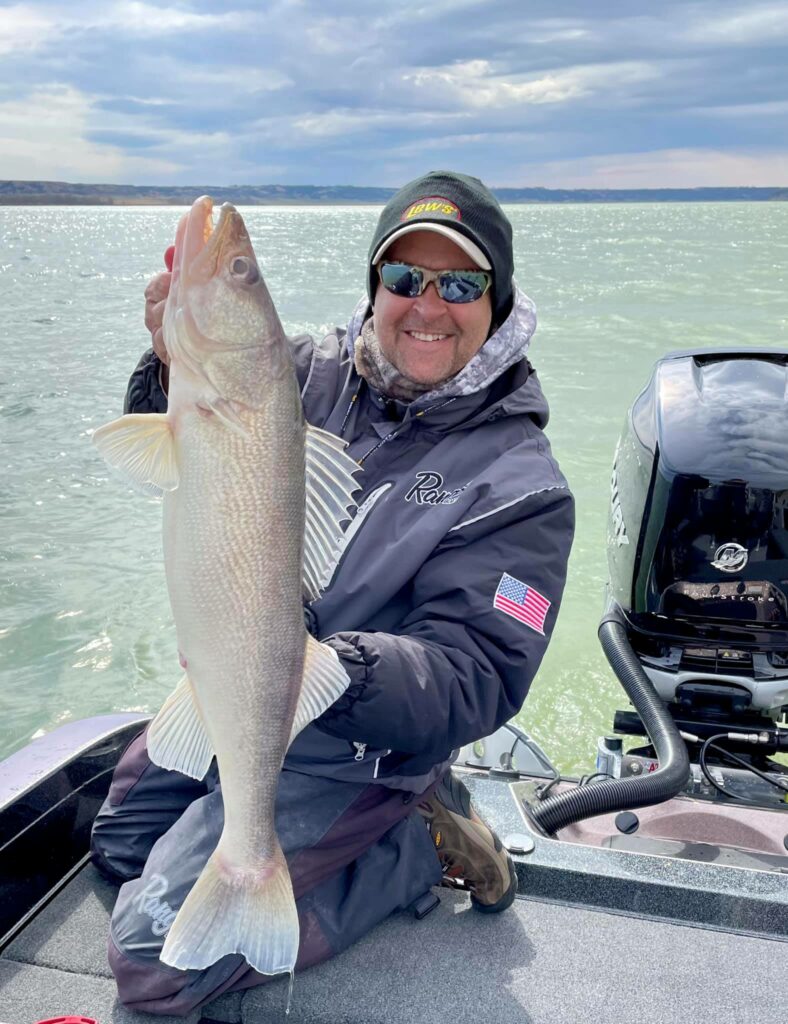
When The Walleye Lightbulb Went Off
“I started playing with drop-shots for walleyes because I was accidentally catching lots of walleyes on the rig fishing bass,” says the elder Przekurat.
“It kind of opened my eyes to what walleyes will actually eat. I think the first time I specifically targeted walleyes with a drop-shot was up in northern Wisconsin. That’s where it all evolved for me—six or seven years ago, in 2017 or so.”
He continues: “Besides the early-river drop-shotting, if I’m fishing any clear body of water—which I define as having at least four feet of visibility—that’s where I target walleyes on dropshots. Since drop-shotting is typically a sight deal, you need a clear body of water. It really doesn’t matter what lake you’re on; you just need water clarity. That’s the whole key.”
When drop-shotting walleyes, Przekurat is looking for two things:
1) What bait will walleyes eat on a given day?
For Przekurat that mean’s either a worm-style or minnow-style bait.
“It’s really crazy how some days walleyes will prefer one or the other. It all depends on the lake and the fish. There’s no rhyme or reason to it. All I can recommend is alternating between both because I’ve gone hours of not catching a fish on a worm-style plastic and then switch to a minnow-style plastic the bite turns on.”
Przekurat’s go-to minnow-style bait is the Strike King 3X Baby Z-Too Soft Jerkbait, and when to comes to worms, he fishes a Strike King KVD Dream Shot.
2) How far off bottom are the walleyes?
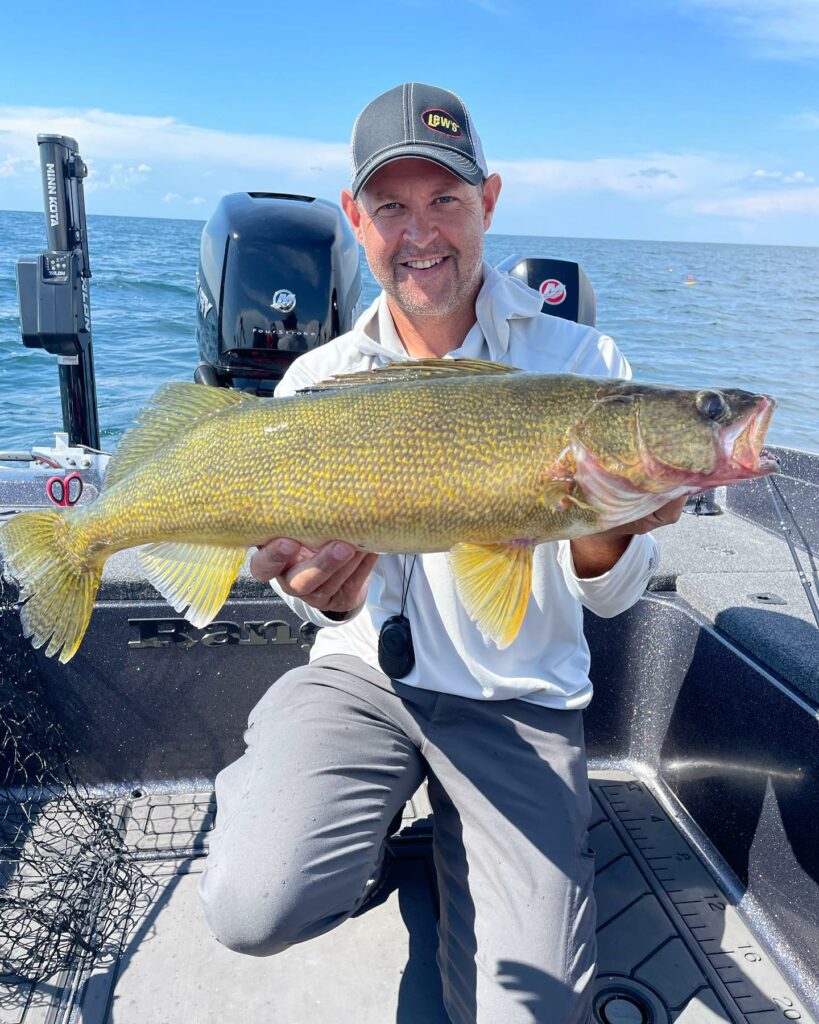
“This dictates how far off the bottom you’re going to be with your drop-shot,” instructs Przekurat.
“For whatever reason, more times than not, a longer dropshot leader has worked better for me than a shorter leader. I don’t know if it’s because walleyes prefer feeding up in clear water, but I’ve done far better on 2- to 3-foot leaders than 1-foot to 18-inches”
At the rig’s meat-piercing business-end, Przekurat likes Gamakatsu G-Finesse hooks.
“Depending on what size fish we’re catching dictates what size hooks we’re using. The smaller the fish, the smaller the hook. The bigger the fish, the bigger the hook. I might go anywhere from a #2 to a 1/0 or 2/0,” notes Przekurat.
Przekurat says there’s no difference between his bass and walleye drop-shot set-ups.
“I use 10-pound Strike King Tour Grade braid mainline tied to a Strike King Tour Grade 8-pound fluorocarbon leader. When it comes to weights, if I’m in rocks I’ll use a teardrop-shaped weight which is less snaggy; in weeds I’m using a cylinder-style weight, which pulls through the vegetation a lot easier.”
He opts for 7-foot medium-power, extra-fast action rods – a Lew’s Signature Series Rod and a Lew’s Hypermag 2000-size spinning reel.
“The thing about drop-shotting walleyes is everything has to be set up perfectly. It’s one of those things where it’s not a fast technique where you can cover water. It’s for situations where you’re on a pod of fish that are in a tight area and they’re not willing to chase a rattlebait or Jigging Rap. That’s when you want to slow down and soak the dropshot in their zone as long as possible,” offers Przekurat.
“I have yet to really dial in a tournament where I was drop-shotting the entire time, but I have caught fish here and there on it. It’s something that has to line up perfectly and fish have to be grouped tightly on a piece of structure. Still, I think it belongs in every walleye angler’s arsenal,” concludes Przekurat.