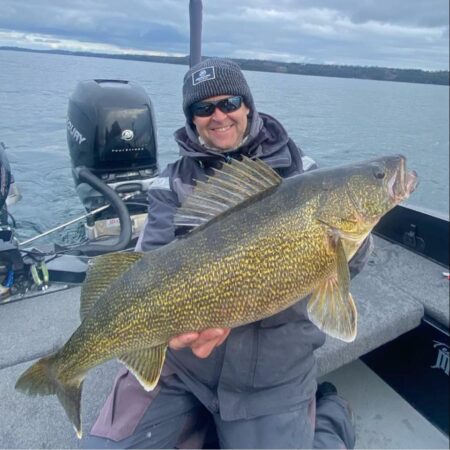
Learning how to use your sonar to identify bait and feeding fish is key in making the most of your time on the water. In this video, NWT Pro Mark Courts breaks down the basics on how to identify bait balls, target species, and actively feeding fish so you can get the most out of your sonar unit.
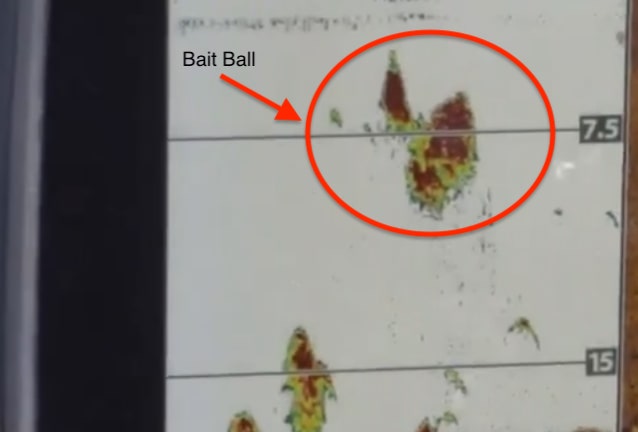
When looking at your 2D sonar screen, many of the smaller arcs, particularly with lighter color profiles, are typically bait fish and perch . The more distinct arcs with deeper, more crisp and dense color tend to be your target species. When your bait fish school up thick, they may share similar color patterns but don’t share the more distinct arc.
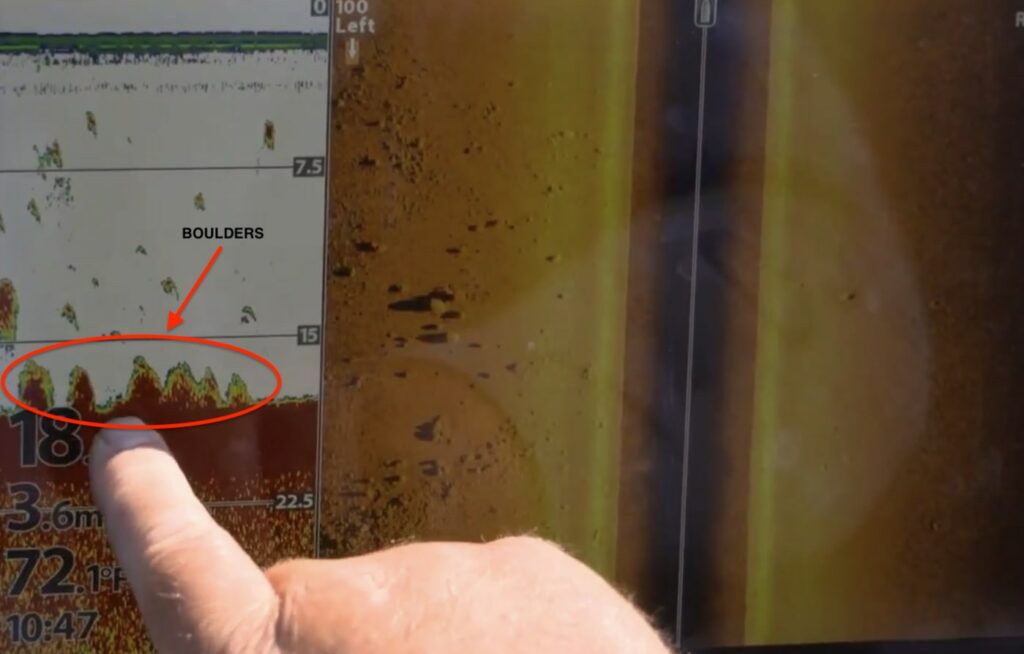
Another tip is to utilize your side imaging in conjunction with your 2D sonar. This will allow you to learn your unit better and how to identify bottom structure from fish. For example, in the image above you can use side imaging to identify the difference between fish and structure. Side imaging is verifying that the returns directly below the boat are boulders, not fish tight to the bottom. You can also use side imaging to help identify important features such as break lines and transition zones that aren’t as apparent on your 2D sonar.
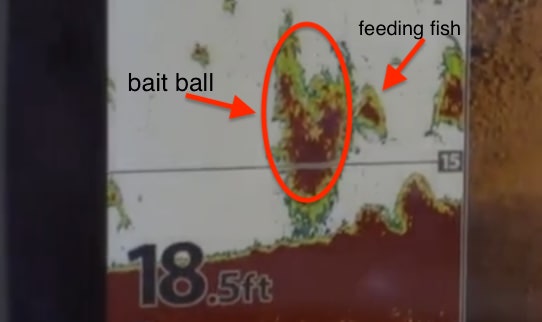
Finally, Mark mentions paying particular attention to when the bait balls get disturbed. When you see these bait balls that are exploding or “Christmas Tree” like, that’s a key sign these bait balls are disturbed. You will want to target these areas of bait because they have actively feeding fish in them. In the image below you can identify a feeding fish disturbing the bait ball.
When it comes to fishing electronics, utilize all the tools to your benefit and be patient. Make a few key adjustments every time you’re out (for things like water clarity, algae blooms, etc.) and you’ll be more successful and a lot less frustrated the next time you’re out on the water.