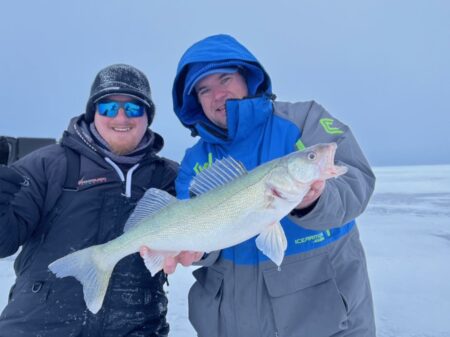
National Walleye Tour pro, Max Wilson is always looking for walleye techniques that aren’t being used by the majority of anglers. One of those techniques is casting a jigging spoon to target schools of roaming walleye in the Bay of Green Bay.
When To Use Jigging Spoons
The bite on Green Bay can shut down when July rolls around due to exploding alewive populations leaving the fish stuffed. Once the alewives start to die off, the walleye have to go back to hunting for perch, gobies, and more reaction style lures. Using his side imaging and LiveScope, Wilson looks for schools of walleye on shallow weed or sand flats, using half ounce jigging spoons to pick off aggressive fish from the school. This technique mimics a perch or dying shad. Wilson lightly snaps the spoon up and lets it flutter back to the bottom causing a feeding frenzy, or competition in the school of aggressive fish. He cautions that the “snap” is a lighter snap than you would use with a Jiggin Rap. Too much of a snap will overpower the spoon.
Max’s Jigging Spoon Setup
Wilson’s biggest tip is to tie direct to a swivel attached to the spoon. Do not use a snap swivel as that will cause a lot of line tangling. He recommends 20 lb fluorocarbon leader tied to a 15 lb braided main line on a medium heavy, extra fast spinning rod. The extra fast action is key for snap jigging the spoon and the medium heavy power has enough backbone for this technique. Often when using this technique the fish will bite on the fall and won’t be detected until the next snap or jigging stroke, so a good backbone is needed to drive that hook home.
When everyone else is trolling spinners or snap jigging Jiggin Raps, switch it up and give the fish something they don’t see often with a jigging spoon.