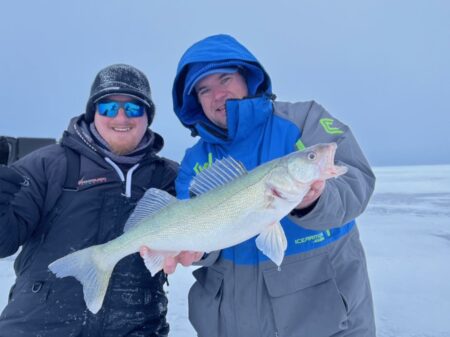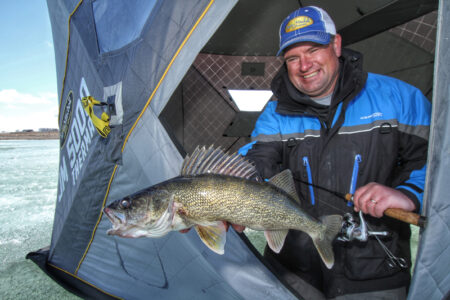
Pro NWT angler Mark Court shares his best tips for power fishing.
Over the last 10 years, power fishing (also known as power corking) has continued to become more and more popular. Basically, power fishing involves driving around with the depth pre-set on the electronics and, the minute the fish is marked, flipping the presentation right in front of that particular fish. It most often times involves bobbers, but in this video Mark not only highlights his power corking setup, but how he uses glide baits to complement his power fishing strategy too.
A One-Two Punch
When power fishing, Mark doesn’t just rely on corking, in fact, he will always have two rods rigged with different presentations. If a fish is suspended, he grabs the classic bobber/cork setup, making sure his presentation sits right on top of the fish. If he marks fish tight to the bottom, he’ll switch to a rod rigged with a glide bait and fishes it in a similar matter. The key with the glide bait is to let it hit the bottom and give it a couple pumps to try to target that strike. If either presentation doesn’t get a bite in 30 seconds to a minute, he reels up and moves on to the next fish.
For Mark, power fishing is about a one-two punch, if a fish is on the bottom use the glide bait and if it’s suspended use the bobber.
Power Corking Setup
Mark also breaks down into detail his corking setup, which is the staple presentation when power fishing. Mark uses a 10-14 lb braided line down to a fluorocarbon leader (~8 lb test) with a small tungsten weight on his bobber line to help get it down quickly. He also uses a fairly heavy cork, set to leave the bait suspended over the fish a couple feet.
He emphasizes that the one key when using braided line with a bobber is to make sure the bobber has a brass insert. If it’s just a plastic insert, every time the hook is set the braid will start to cut the plastic and the line won’t slip through fast and efficiently when casted. He also uses a fairly heavy cork, set to leave the bait suspended over the fish a couple feet.
As far as bait is concerned, live leeches are great but when moving a lot, plastic leeches can work even better. This is because plastic is always ready to go and doesn’t twirl up on the hook. When using plastic leeches with a bobber, another tip he emphasizes is to whacky rig it so that when the waves hit the line, it flops and moves around. He pairs his corking setup with 1/16th ounce jig with a plastic leech.
Depending on the situation and water clarity, he also recommends matching the jig or glide bait color to “the hatch” or preferred bait color. Mille Lacs is currently full of perch, so a good match is often fire tiger color. Another option is crawfish when fishing early in the year and around rocks. However never be afraid to mixup colors when attempting to trigger a bite.
Power fishing at its core is a highly effective technique on many waters. In summary, it involves a simple presentation, trusting the electronics, and making precision casts on top of individual fish efficiently. With a little bit of practice, power corking can help anyone have a more productive day on the water.