National Walleye Tour Champion, Max Wilson sat down with Virtual Angling to discuss which techniques have been working for him during this week’s NWT Championship event in Devils Lake, North Dakota. The video above and written article details how Max has attacked the Devils Lake walleye over the past week during practice.
Jigging Spoons
One of the most effective lures Max has had is a jigging spoon, specifically a gold hammered Moonshine Lures Shiver Spoon. It imitates a dying shad which the walleye actively feed on as they bulk up for the winter. One modification Max makes to the lure is replacing the treble with a quad treble hook. The extra hook increases hookups especially when the fish swipe at it and aren’t fulling committing.
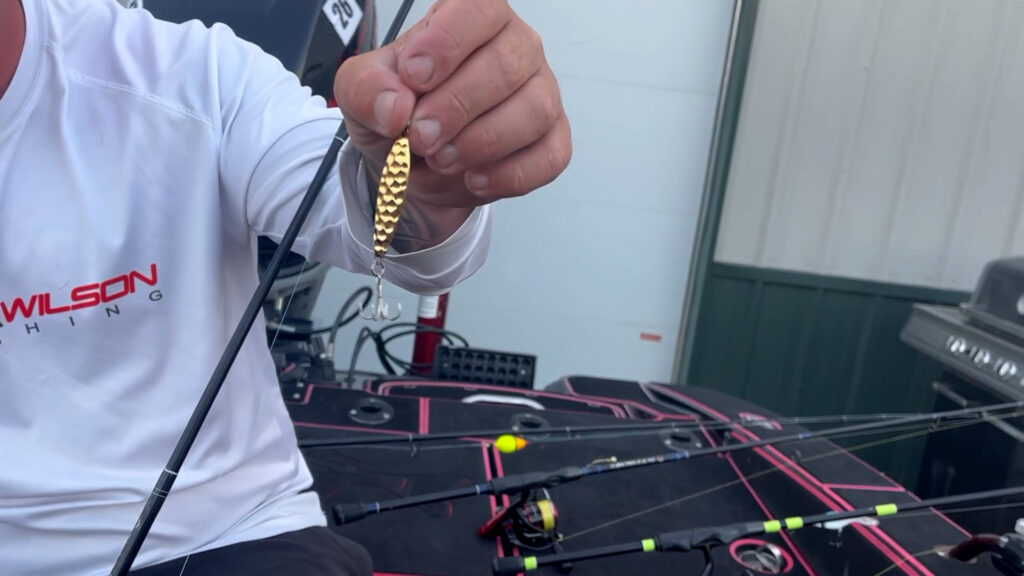
Another tip Max discusses is using a heavier (20-pound test in this case) test fluorocarbon leader. When using lighter pound test fluorocarbon, the spoon has so much action the hook frequently fouls up on the line. With heavier fluorocarbon leaders, Max finds the action of the spoon is still good, but the line has less stretch, reducing the foul ups. For his mainline, he goes with 20-pound test as well. As far as rod and reel, a medium, extra fast rod with a 6.2.1 gear ratio reel is ideal for this type of fishing.
One common mistake Max notices anglers make when fishing jigging spoons is their jigging cadence. Unlike jigging rap style lures, a hard, quick snap with a spoon will impart too much action and can cause frequent foul ups. When Max fishes jigging spoons, he uses a softer “pull snap”. He casts it out, lets the spoon hit bottom and uses the slower pull snap. Max then keeps the rod tip high letting the spoon slowly fall on tight line, which gives the spoon a vertical shimmering action which mimics dying shad. This technique is great for basin fishing, but it really shines on weed edges.
Jig and Crawler with a Twist
It’s not flashy, not high-tech, but a jig and crawler sometimes just flat out catches them. Max opts to go with a 3/16th ounce, tungsten Clam TG jig because it drops straight down, much faster than a lead jig. Not only does it get to the fish quicker, but it also generates more reaction strikes because of how quick it falls. Add a crawler to it, and it also spins on its way down. The biggest thing Max does is thread the worm onto the hook about halfway down the hook shank. Then he pushes the hook point through the worm leaving the rest of the crawler trailing in line with the hook. If he starts getting short strikes, he pinches off part of the worm, leaving about two inches of the worm trailing the hook.
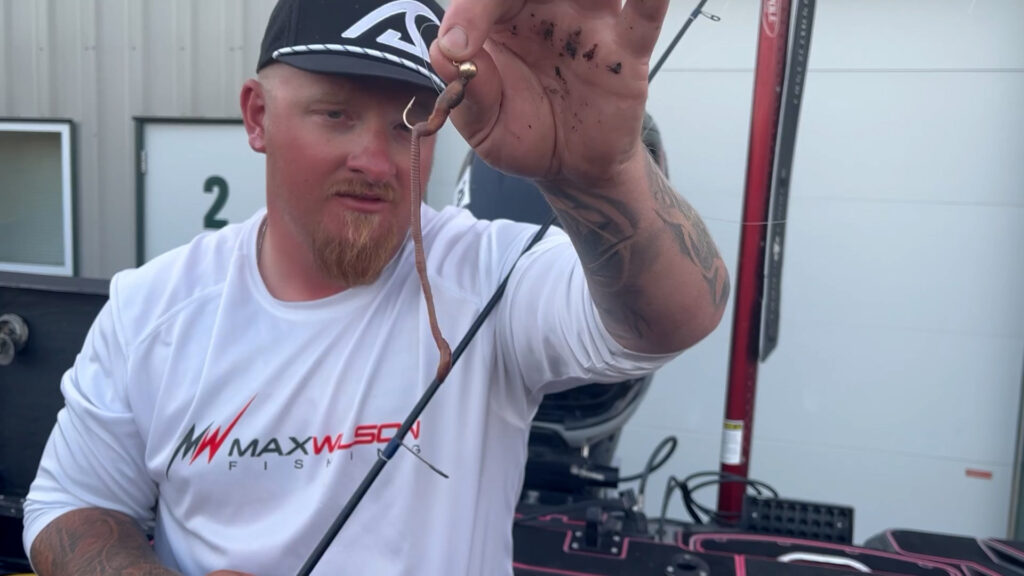
Because of the amount of rock and wood Devils Lake has, he uses 16-pound test fluorocarbon instead of his usual 10 or 12-pound test. This gives him protection against the stumps and rocks that Devils Lake walleye love to live in. For his mainline he uses 10-12-pound test braid on a Piscifun 6.2.1 gear ratio reel. His rod for this technique is a 7 foot 1 inch, medium light, extra fast, which allows him to feel the bite, without the fish feeling resistance of the rod.
Shallow Casted Crankbaits
There aren’t many days without wind on Devils Lake and crankbait bites excel on windy days. When Max finds himself in windy conditions he heads straight for the windblown side of the lake and starts casting shad style crankbaits to shallow structure. Shoreline, shallow points, wood, and rock. If the wind is blowing into it, baitfish are also being blown into it and the walleye are there waiting. A #7 jointed Flicker Shad in blue and white from Berkley is Max’s go to crank. Crankbaits also cover a lot of water quickly and deflect off shallow cover such as rock and wood which tend to generate a lot of bites. 20 pound test fluorocarbon is recommended for added abrasion resistance as the crankbait runs through that hard cover.
Jig and Paddletail Swimbait
Once late summer and early fall come around, especially after a cold front, walleye love to go deep into weed lines. One of the most popular ways the NWT anglers like to fish this pattern is a jig with a paddletail swimbait. The key is making contact with the weeds. Once the lure gets caught on a weed, giving it a good rip to free it often leads to a strike. Max opts for the Champ Swimmer by Berkley, in the perch pattern, which is what the walleye primarily feed on in the weeds. While other swimbaits on the market will do, Max prefers the Champ Swimmer because of it’s durability and realistic colors. It doesn’t rip or get chewed up when ripping it through heavy weeds.
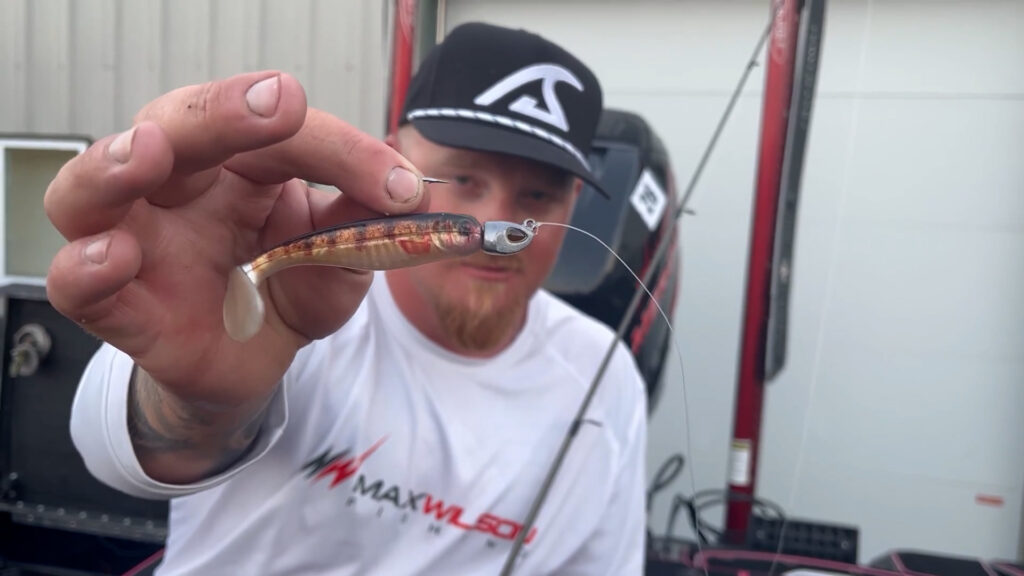
Max’s setup includes the Champ Swimmer, rigged on a half-ounce, lead Berkley swimbait jig tied to a 20-pound fluorocarbon leader, connected to 20-pound braided mainline. Ripping this setup through weeds requires heavier line and a stout rod so Max uses a medium heavy, extra fast rod with a 6.2.1 or faster reel. The technique is simple. Cast the rig out, let it fall through the weeds to the bottom. Then give a quick rip up through the weeds and let it fall back to the bottom. This technique is a reaction style technique which is why quick twitch movements make it so effective on walleye waiting to ambush baitfish.
These four techniques are Max Wilson’s go-to’s for this week’s National Walleye Tour Championship on Devils Lake, but can be effective on any walleye fishery.