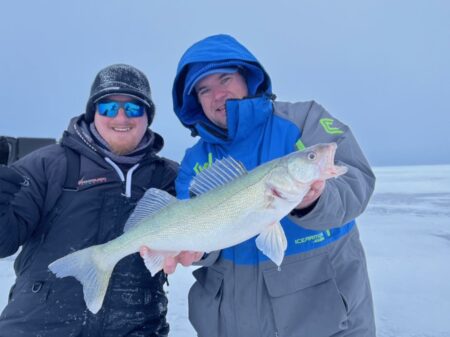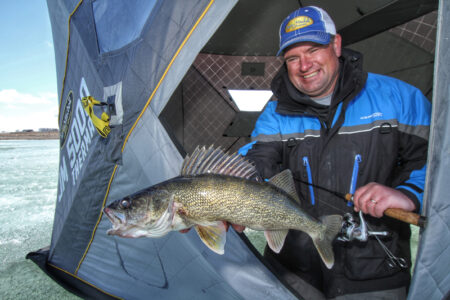
Born and raised in Minot, ND and a current resident of Glasgow, MT, Ken Schmidt has fished the Missouri River Reservoirs his entire life. With that experience comes an impressive tournament resume that includes several top ten finishes, winning both the MT and ND Governor’s Cups. That’s why we have asked him to breakdown exactly how he uses bottom bouncers to catch more walleye.
The Bottom Bouncer Set Up
When bottom bouncing, Ken prefers a heavier 2 oz bottom bouncer when fishing the front of the boat and a 1.5 oz bouncers in the back. `
For a leader, he uses a 4-5 foot low death style hook with a single bead.
`How to Properly Rig the Bait
Next let’s talk about bait placement. How the worm is rigged is important in the presentation. He recommends that when using this setup, make sure to feed the worm all the way on the hook starting from the very tip. Also when tying these rigs, leave a little bit of a tag to help hold the worm on.
Another important tip when rigging the worm is to make sure to push the worm all the way over the end of the hook, and then pinch a bit off of the tail. This allows you to give off more scent when moving through the water.
The ultimate goal is to have a twirling action in the water.
The Proper Rod for Bottom Bouncing
Pair this set up with a medium powered rod with a fast action tip. This will allow you to detect the fish biting and has enough play to let the rod load up and keep that hook pinned.
How to Handle an Aggressive vs. Finicky Bite
With bottom bouncers, you can simply leave your rods in the rod holders and let the fish load up. If it’s a lighter finicky bite, slowly take your rod out of the holder without pulling it or letting it drop. This way the fish doesn’t feel the weight of the bottom bouncer. If it’s a big fish, or an aggressive bite, sometimes they’ll hammer it and you’ll need to grab your rod and just set the hook.
The Importance of Varying Your Speed
One of the biggest keys is to vary your speed. One day may require a slow troll, while the other may require speed. Try different speeds and see what works best for the current bite. Simply keep your speed up enough to keep your slow death hook swirling through the water.
Don’t Let Too Much Line Out
One of the biggest mistake anglers make when bottom bouncing is letting too much line out. Let just enough line out that the bottom of the bouncer is just ticking the bottom of the lake. This usually means your line is out at roughly a 45 degree angle.
The more line you let out, the more the bouncer will lay down and drag your bait on the bottom. You don’t want this.
Instead, you want that bouncer riding upwards. This also helps keep it from getting stuck in rocks and other debris.