Top tips for fishing blade baits mid-winter through early-spring
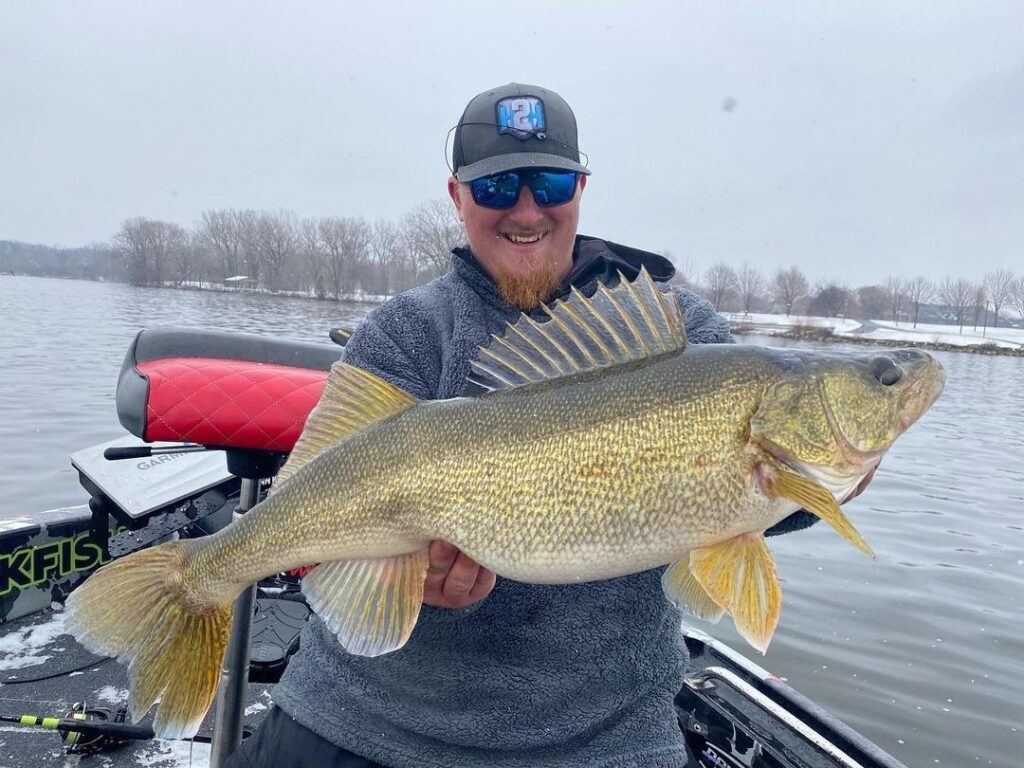
Looking for a better and more fun way to catch mid-winter thaw into early-spring river walleyes?
Clip on a blade bait…
No matter what brand blades you fish—and we suggest you carry a number of different sizes, weights, and colors—they simply produce when other methods often fail. For mid-winter thaw through early-spring walleyes, they can be hard to beat.
First, the tendency is to fish blades too fast. Even if you’re fishing the bait aggressively on long pulls, you still need to make sure it’s getting back to the bottom on each sweep of the rod. Blade baits are intended to be a methodical presentation for targeting specific structure and depths.
Virtual Angling pro Max Wilson has proven tough to beat on pro walleye circuits, especially in cold-water scenarios.
As Wilson points out, walleye feeding instinct and behavior relies on three things: sight, smell, and sound. If a walleye can’t see the bait, you want to make sure they can feel it. That’s where blade baits come in.
While you can catch walleyes on blade baits year ‘round, Wilson says it’s when water temps range from the low 50s to near freezing that they can really produce.
“The general rule of thumb is the colder the water, the better. If the water temp is 50 or below, that’s when I get really excited,” says Wilson.
“Thing is, blades get a reaction-bite bait in cold-water, even if the fish are sluggish. Secondly, they excel on river systems with limited water visibility.”
Another great thing about blades? They’ll work everywhere from 1-foot to 50 feet of water—and all zones in between. You just have to size your blade weight accordingly.
“When walleyes are in 30-50 foot river scour holes during the dead of winter, I’ll throw a blade bait down there and the vibration will trigger bites even though the fish are pretty lethargic. You aggravate them so much they want to kill it to stop the vibration. Later, in early-spring, walleyes will be up in 1-3 feet of water and that’s where the vibrations work really well, too,” says Wilson.
How To Work A Blade Bait Right
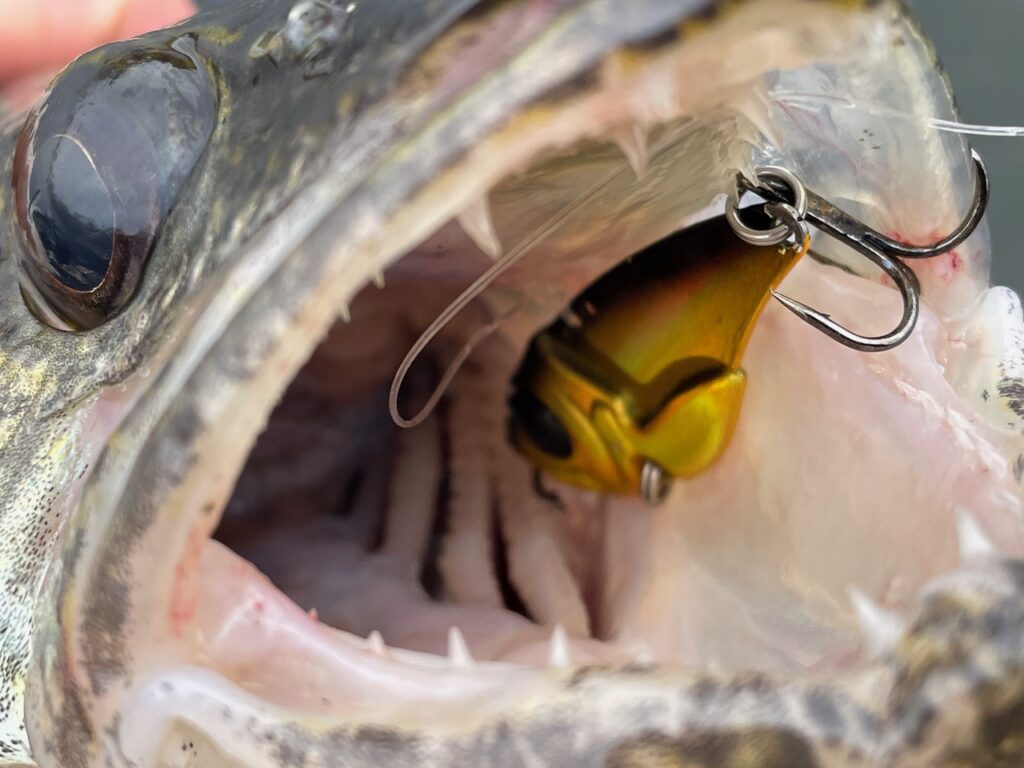
“For the longest time,” says Wilson, “I could not figure out how to get bit on blades. On the Fox and Mississippi River guys were kicking my butt on blades, and I couldn’t catch a fish off of them.”
Then one day—like magic—Wilson cracked the nut on blades and the bite was lights out.
“I was trying to do too much with the blades; really over-thinking it. Once I dumbed things down and went back to the basics and just went fishing with them, it clicked. Vibrate, let it hit bottom, vibrate, let it hit bottom. It’s a simple technique that’s become one of my favorite ways to catch fish because it’s a reaction bite that will catch fish 9 times out of 10 when other baits don’t.”
“With Jigging Rap-style baits, guys are snapping really hard and fast, and with rattle baits it’s more of a slow pull. I kind of do a hybrid of those two cadences.”
The biggest things to remember, Wilson advises, is the rod and bait movement should all occur in movement of the wrist.
“I start downward with the wrist and move upward slightly. It’s not a snap with slack line, it’s a quick aggressive pull with a snap.”
Blade Bait Choice
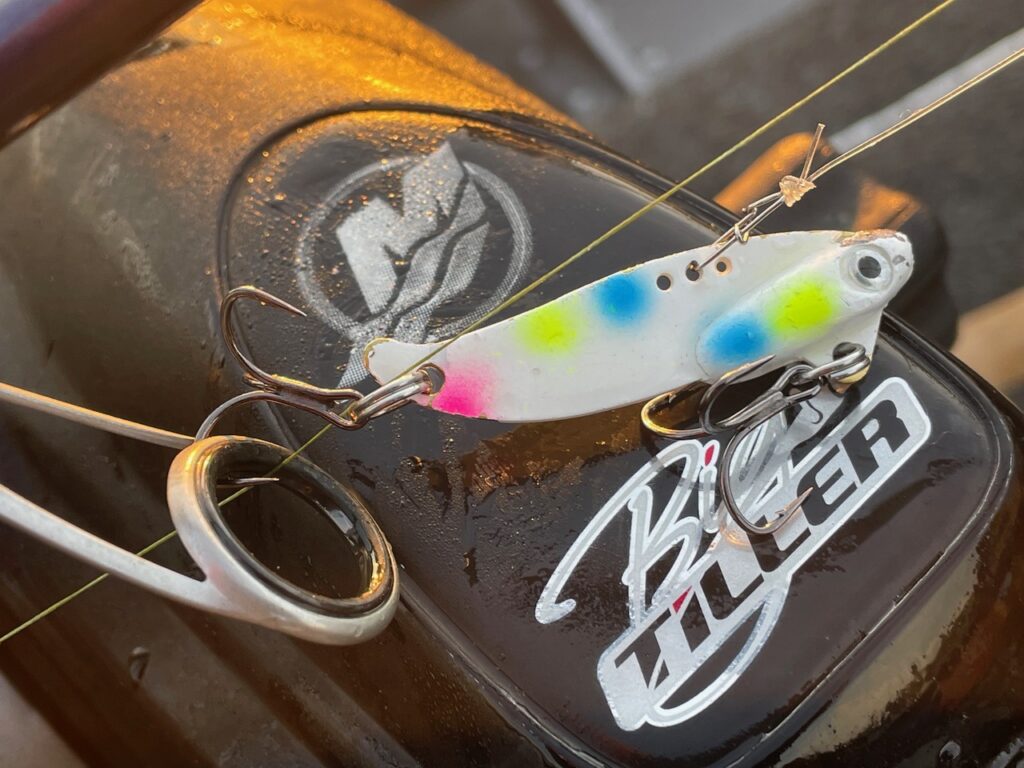
Wilson fishes just about every blade available on the market, applying each to match the forage size of the waters he’s fishing, as well as the weather conditions.
“I fish just about everything – from Sonar-style baits to the newer stuff on the market – in both classic minnow- and wider shad-body styles,” shares Wilson.
While a lot of anglers easily get hung up on colors – even to the point of custom paint jobs like your Great Lakes crankbaits – Wilson’s into “shades of colors.”
“I want bright, loud colors for walleyes to visually locate. In the Mississippi River, I throw a lot of orange, yellow, fire tiger, green, and chartreuse. But sometimes the more natural colors—blues and purples—also get bit. It depends on water clarity and weather. On a bright sunny day I’ll fish chrome green or chrome purple and on cloudy days I go to matte colors which cast a better silhouette in the water,” shares Wilson.
Rod, Reel, and Line Set-up
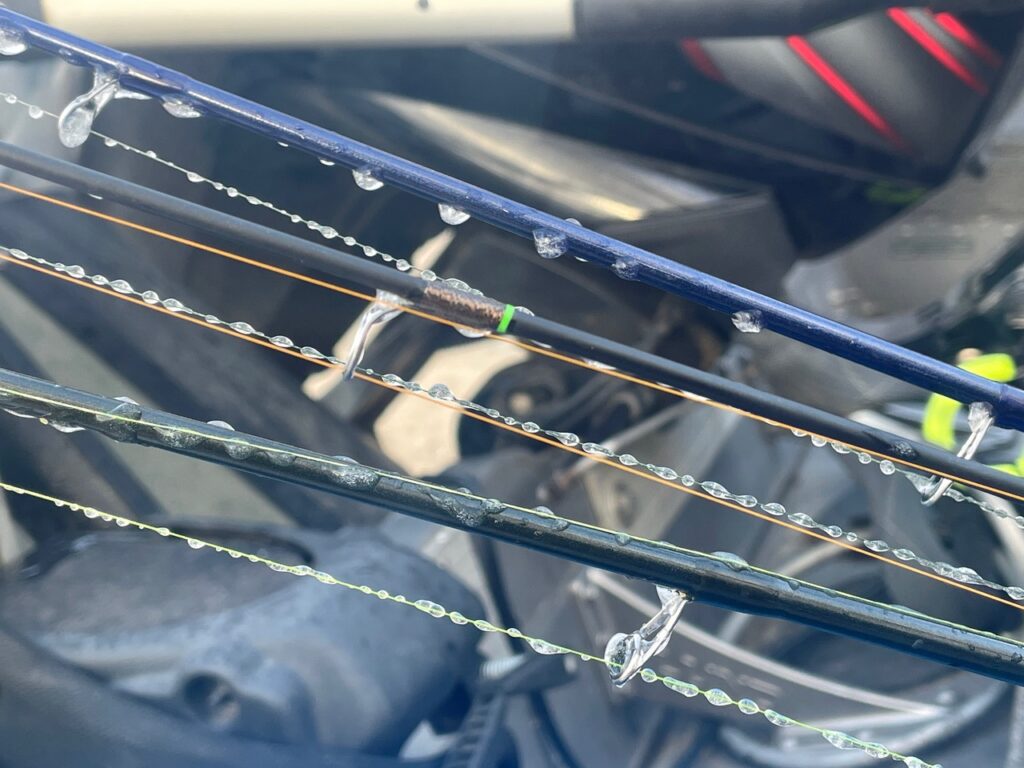
“I’m pretty picky on the rods I use for blades. I fish a 6’10” medium-light power, extra-fast action spinning rod. That’s my go-to rod for blades, rattle baits, and crankbaits. I like a rod that you can feel the vibration from over the entire rod. A lot of times with a bladebait you don’t feel the fish bite so my cadence is my hookset. If you have too stiff of a rod you’ll pull hooks out of fish. You want something with enough absorption that the fish absorbs the initial hookset and head shakes,” says Wilson.
“You’ve gotta remember that there’s a chunk of lead in their mouth,” laughs Wilson. “And they’re thrashing so there’s the potential to lose a lot of fish. As far as reels, I fish a 2000 size reel with goo line pick-up. I like more line pick-up per rotation. A lot of times I’m making short pitches and might not make the right cast and need to reel in quick and re-pitch. Since I fish walleyes a lot more in rivers, I’m constantly on current seams or wing dams and making lots of short pitches.”
When it comes to line, Wilson fishes 12- to 15-pound braid tied directly to a 1-foot leader section of 15- to 17-pound fluoro to keep the blade from fouling on itself. In clear waters he runs 18- to 24-inches of fluoro.
“Some river rats will tie braid directly to the bait so they can get their baits out of snags easier, but I’ve noticed if you don’t have a heavy fluoro leader it really messes with the action of the bladebait. It has the tendency to tangle up in the main line.”
Wilson advises that the heavier the fluoro leader the more springiness the bait has, which often attracts strikes.
“Heavy fluoro leaders allow me to fish it blades in some pretty gnarly areas and pop baits in and out of snags easily. Swivels are subjective. If I’m fishing by myself in a snaggy area, I will use a swivel. That way if I snap off, it’s just the bait and I don’t have to tie on a whole new leader. If I’m with clients or on clear water, I use a line-to-leader knot,” instructs Wilson.
Additional Late-Winter/Early-Spring Details
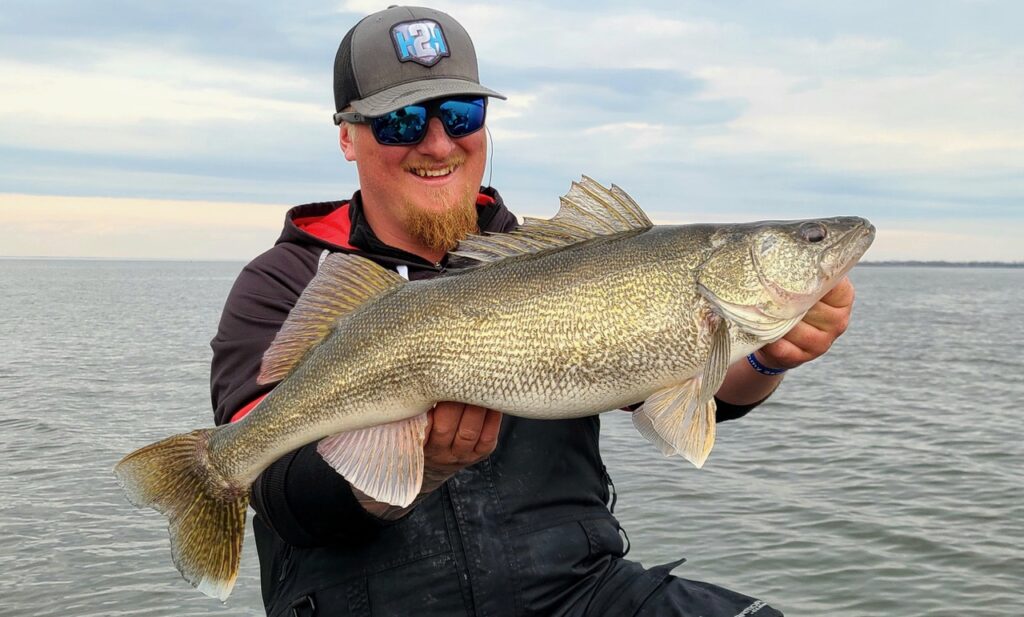
In late winter and early spring walleyes start to emerge from their winter comas and are very slow-moving. Wilson says the mistake a lot of anglers make is using the same cadence they would in the fall months. Instead, it’s a small pull, enough to feel the vibration, and then letting the bait hit the bottom.
Wilson concludes: “I don’t snag a lot of fish in the spring. A lot of anglers do because they’re working the bait too fast. Once I slowed the cadence down, blades became my deadliest mid-winter to early-season river approach.”