Tony Boshold is a two-time National Ice Fishing Champion from Chicago and has been ice fishing since about 2002. In this video, he breaks down his best information and lessons learned when it comes to panfish rods. He discusses when and where to use strike indicators (e.g. spring bobbers), straight tightlining, and palm rodding.
Tough bite days on the tournament road were some of Boshold’s best because he knew how to outcompete his competitors by properly using his strike indicators to detect the lightest, finicky bites. If he’s on a more aggressive bite, Boshold will run a straight tightlining rod with hi-vis line with no added strike indicator (i.e. spring). When the fish are more hesitant and blowing at the bait, Boshold opts for a rod rigged with a spring, strike indicator to allow the bait to swing and move as the fish wants before committing to bite. Without a strike indicator, you might feel the fish blow the bait and try to set the hook too soon.

When it comes to line for his panfish rods, Boshold generally doesn’t go any lighter than 2 lb test and generally choses a hi-vis color for added strike indication. Generally speaking, he ties direct to the line without any leaders.
With palm rodding, you can go even lighter and really feel every little thing but it isn’t for everyone. That where using a spring strike indicator can come in handy so you can keep using your long rod on the toughest bites.
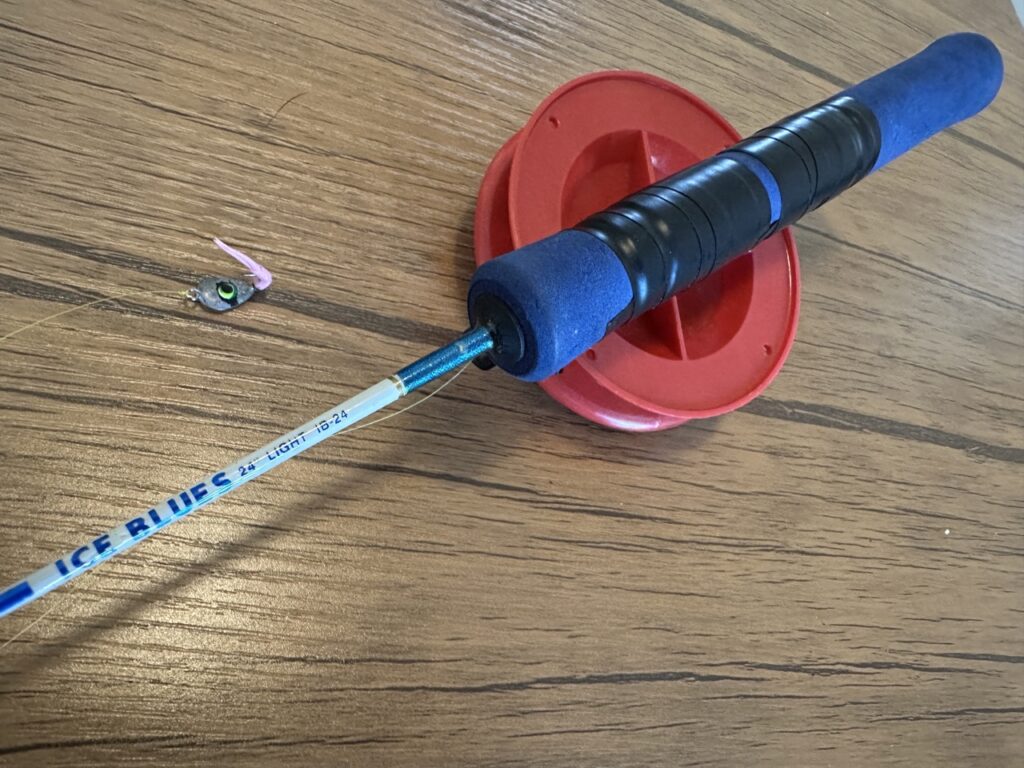
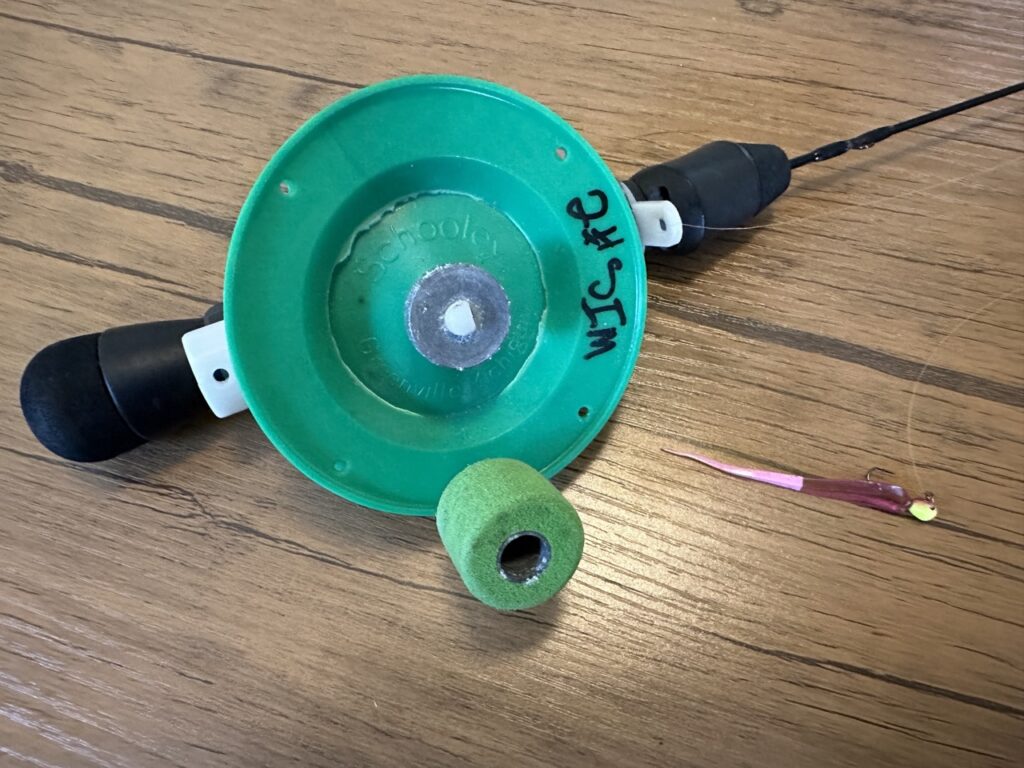
A lot of tournament anglers these days have gone to custom rods. Either having them built the way they want them or making their own and customizing what they have. Boshold shows a 24” Ice Blue rod that he trimmed the orange tip off so that it’s a 20” straight tightlining rod with no strike indicator. Adding larger knobs on Schooley reels is a common change for added ease of use with gloves on. A lot anglers are also adding on springs, often mylar springs which don’t freeze up as often and can be stored by pulling it back or slid out to the appropriate action for the jig.