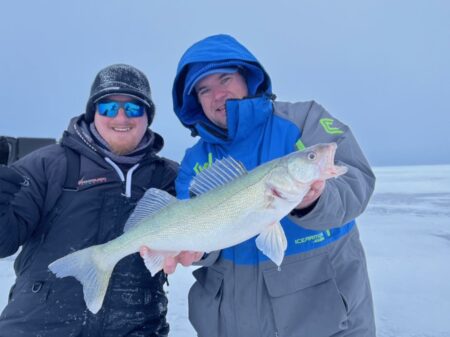
Leadcore trolling has gained popularity for the fact that it’s simple and deadly. It allows you to cover a lot of water, especially mid-summer when walleyes go deep over basins. Leadcore allows a crankbait to be trolled at deeper depths than it normally would reach on its own.
Jason Mitchell leans on leadcore this time of year because it allows him to cover water effectively. As a rule of thumb, he trolls with leadcore at 2 miles per hour and then adjusts if there aren’t any bites. It can be very speed dependent and the slightest adjustment in speed can turn the bite on.
Leadcore is larger in diameter than standard fishing line, so a bigger reel is often necessary. Larger sized line counter reels are recommended because the larger spool can hold more line. Leadcore adds a lot of weight to your setup and shorter trolling rods are what Jason prefers, especially if they aren’t used in rod holders. The shorter the rod the more comfortable it can be to hold onto for long fishing sessions. If the rods are in rod holders longer rods aren’t a problem.
Determining how much line to let out can be difficult. A rule of thumb that Jason likes to use is this: Let the line off the reel slowly and once you start to feel bottom, reel up until you feel the crankbait vibrating. The crankbait should be just off the bottom and in the target area with this process. Having a line counter reel makes this much easier and allows the angler to repeat the exact depth the crankbait is running. Charts are also included with leadcore and help explain how much line needs to be out to reach a desired depth.


2 Comments
Jason, your coverage of how, when and what gear on the leadcore is really good. You highlighted using #5 Shads (Northland Rumble Shads, in this case). Do you find the #5 is a better size than the #7? Also, do you ever use 12# leadcore instead of 17#? Thanks.
I find the smaller sizes often work better mid summer and tend to use the larger size cranks into the fall, but it can vary by fishery. I have always just used the 18 lb lead core as the knots seem to hold up better. – Jason Mitchell