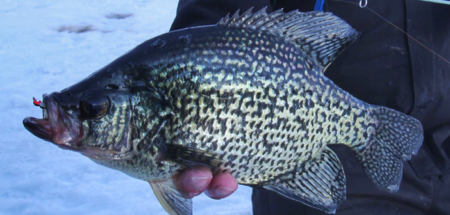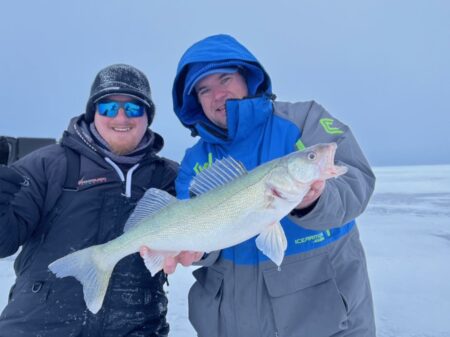
Perch numbers are generally trending upward on Devils Lake, explain Jason Mitchell. Because the lake has come up so much, tripling in size since the 1990s, a lot of his perch fishing happens over deeper water. Target locations are often soft bottom areas off the old shoreline or off the old transition in 30 – 40 feet of water. Perch forage mainly on small invertebrates, so the best baits are often small spoons, droppers, and tungsten jigs with an XL hook that get down to those deeper depths quickly.
When fishing these deep depths with small baits, Mitchell can’t stress enough that using straight braid will greatly improve your bite detection. 4 or 6 lb test such as Clam’s Frost Braid will do the trick and utilizing a hi-vis color will help you watch the line that much easier. Braid will also help you set the hook so much better in that deep water. If you use monofilament, there’s going to be so much stretch in that long length of line that you might find yourself missing more hooksets. Much of the time when using braid, we talk about the importance of pairing it with a fluorocarbon leader. However, when you’re fishing at these depths the water is often dark enough that you can go straight braid without negatively affecting the bite and spooking fish. If you’re using a lighter color or hi vis braid and want to further reduce line visibility, you can simply take a sharpie marker and run it along the line to darken it down the last foot or two to your lure.
Every so often with the right water clarity and light penetration, Mitchell has been able to watch these deep perch with an underwater camera. At these depths, he’s noticed that when the fish grab the bait and suck in the jig, they might have to push it 4 to 6 to 8 or more inches before you get any indication on the rod tip. Going straight braid will make your sensitivity a lot better for detecting those light bites and will also improve your hook sets so you land more fish.
Shop the Gear:
- Clam Frost Braid (4 or 6 lb test)