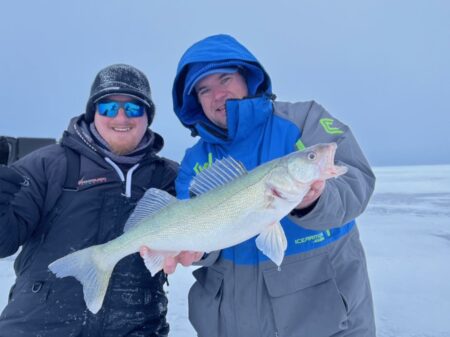

Scott Seibert fishes the AIM Minnesota Walleye Tournaments and also does some guiding. Scott’s favorite body of water to fish is Lake of the Woods and the Rainy River. This system in its entirety is massive and home to huge numbers of walleye. What also makes this part of the world interesting is the chance for truly giant fish. In the upper Midwest away from the Great Lakes, this fishery might be the best opportunity for a legitimate thirty-inch walleye. Scott spends a tremendous amount of time fishing the Rainy River in the fall and loves the fall fishing because there are way fewer boats.
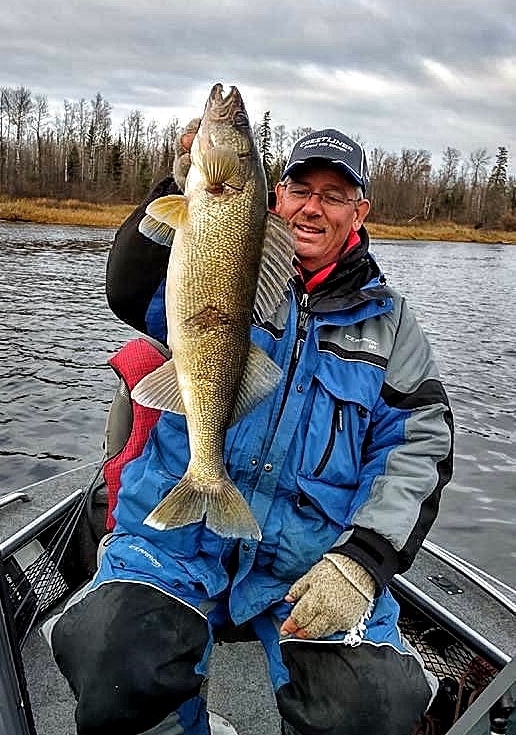
If you fish the Rainy River in the spring, you know about waiting in line to unload and load your boat and the long lines of vehicles parked off the shoulders of the highways leading to the popular boat ramps. In the fall, there might not be as many fish but there are also way fewer boats and because of these factors, Seibert believes the fishing is often better on the Rainy River during the fall than the more popular spring season.
The fall walleye fishing on the Rainy River seems to be driven by the shiner migration. Each fall starting in September, shiners will leave the expanse of Lake of the Woods to winter in the Rainy River. This migration of shiners brings the walleyes into the river. There is also a population of walleye that never leave the river. Compared to the spring, there are fewer flooding variables like ice jams and tributaries breaking loose that can destroy the bite, but Scott does warn that there have been years with heavy fall rains that have created spring like conditions.
In the fall, flow is a good thing that seems to pull more fish up out of Lake of the Woods. Higher river flows typically setup better fishing in the fall when Scott reflects over past falls on the Rainy River. The locations that hold walleye in the fall are very similar to the same locations that hold fish during the spring. Current seams and slack water next to the current seam in depths of six to eight feet can hold a lot of fish. Deeper slack water spots or troughs that feature a saw tooth bottom in 8-14 feet can also hold fish. During the fall, fish can often be scattered, and they seem to move into the river in waves.
“There are times when you can just spot lock on one spot, and you will just get waves of fish that move underneath you where you never have to move. There are other times when you just have to move a lot and hunt down fish,” explains Seibert.
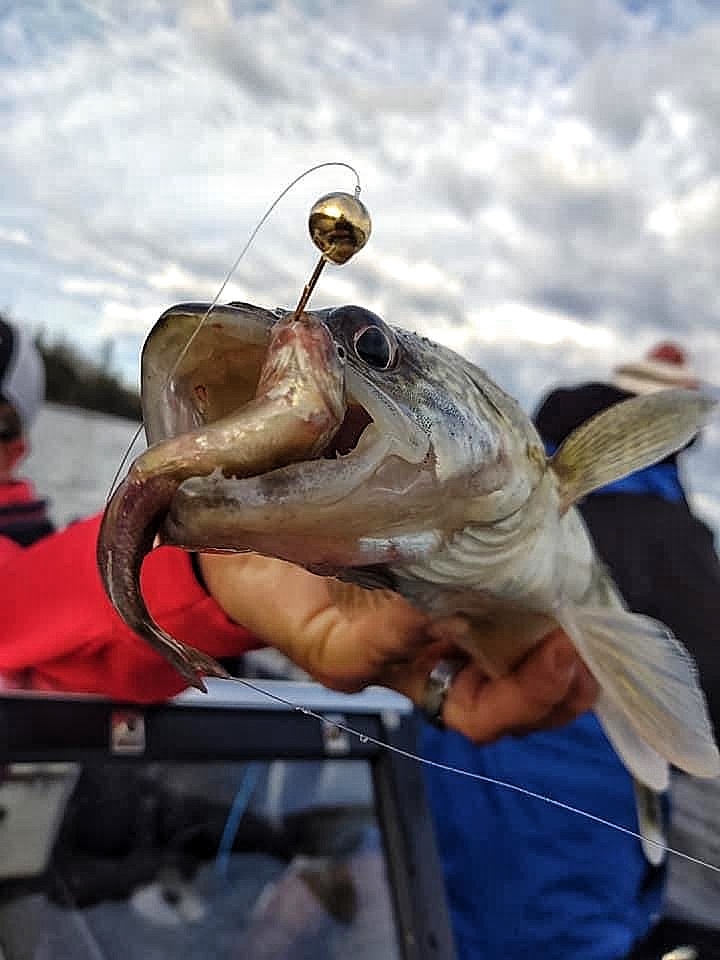
During the fall, Scott often goes back to a jig and minnow and believes either a frozen shiner or large fathead minnow can work better as the water temperatures cool off but does point out that jigs and soft plastics can still work. Dragging jigs and minnows along current seams or through slack water next to current is deadly if the bottom is clean enough to drag. Dragging slowly upstream with the trolling motor or slipping with the current while long lining jigs accounts for a tremendous number of fall walleye on river systems. The jigging presentation that Scott finds so deadly in the fall is more of a long line, dragging presentation with a jig and minnow. Scott also likes to fish vertically below the boat with glide baits like Jigging Raps or Tikka Minos particularly in deeper water.
Because there is so much less angling pressure in the spring, Scott stresses that you can focus on the big, obvious locations that offer the largest current seams and the most amount of slack water. While these same general locations can be bumper boats in the spring, these same locations can hold a lot of fish in the fall without hardly any other boats on the river. Scott believes fall fishing on the Rainy River offers real opportunities at catching big fish. In fact, he argues that he likes his odds better in the fall than during the spring. “I typically spend most of September and October fishing the Rainy River and will fish it right up to Halloween most years. In the fall, there might be fewer than twenty boats at the boat ramp on a weekend and there is a lot of river to fish where there simply are not any boats and that is why the river can be so good in the fall. Similar migration of fish out of Lake of the Woods as what you see in the spring without all the boats,” stresses Seibert.