
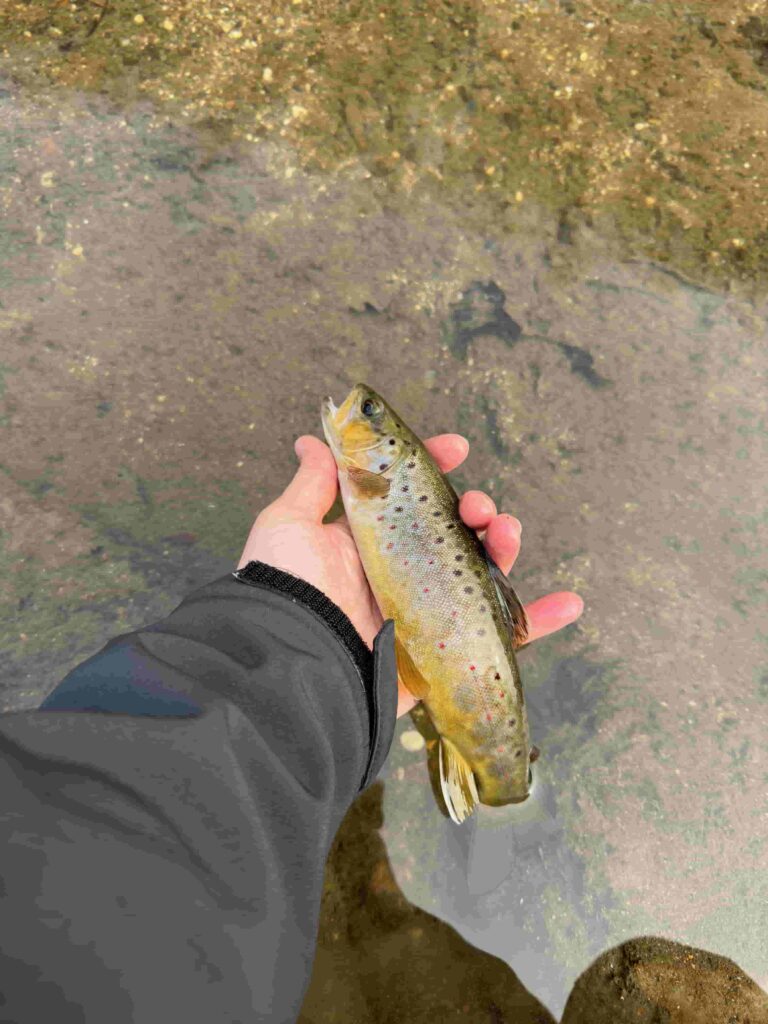
Hauling ice fishing gear miles across a lake, hole hopping, and kneeling on the ice can get old for even the most avid ice anglers. Thoughts of long casts, big hooksets, and the sound of water begins to fill your mind. There’s just one problem. Two feet of ice is still covering the fishing grounds. But a short drive away, is a place with running water, picturesque landscapes, and beautiful, hard fighting brown and brook trout. The Driftless Region of western Wisconsin is the medicine to your open water sickness.
Wisconsin Trout Season and Licenses
Quite possibly, the best thing about trout fishing in the Driftless Region is the fact that the Wisconsin catch and release season opens in early January. While trout can be caught early in the season, the bite doesn’t really get going until air temperatures get into the mid-30s to 40s. At these temps, hatches of small invertebrates start to occur and the trout will become very active. To target these fish you will need a valid Wisconsin fishing license as well as a Wisconsin trout stamp. Be sure to check for any special regulations on the Wisconsin DNR’s website: https://dnr.wisconsin.gov/topic/Fishing/trout/index
Finding and Accessing Driftless Trout Streams
There are dozens of rivers and streams in the Driftless that hold trout and it can be overwhelming trying to pick which one to fish. One of the most effective ways to find which watersheds have trout is the Wisconsin DNR site. Type “trout fishing” into the search bar and you will find some guidance into which rivers and streams have trout. They also have a mobile app, T.R.O.U.T., that can guide you to fishable trout waters. Another effective tool is a mobile app called TroutRoutes. Color coded map overlays and stream ratings make it easy to choose which rivers and streams to target.
Accessing bodies of water is always an important topic when it involves shore fishing. Any of these rivers and streams can be legally accessed at bridge crossings or public areas that aren’t marked with any prohibitive signage. Many of these trout fisheries aren’t near populated areas, but a good rule of thumb is to treat the land around the streams and rivers as private property. If you stay in the water, you shouldn’t have any issues regarding trespassing.
No Fly Fishing Gear? No Problem
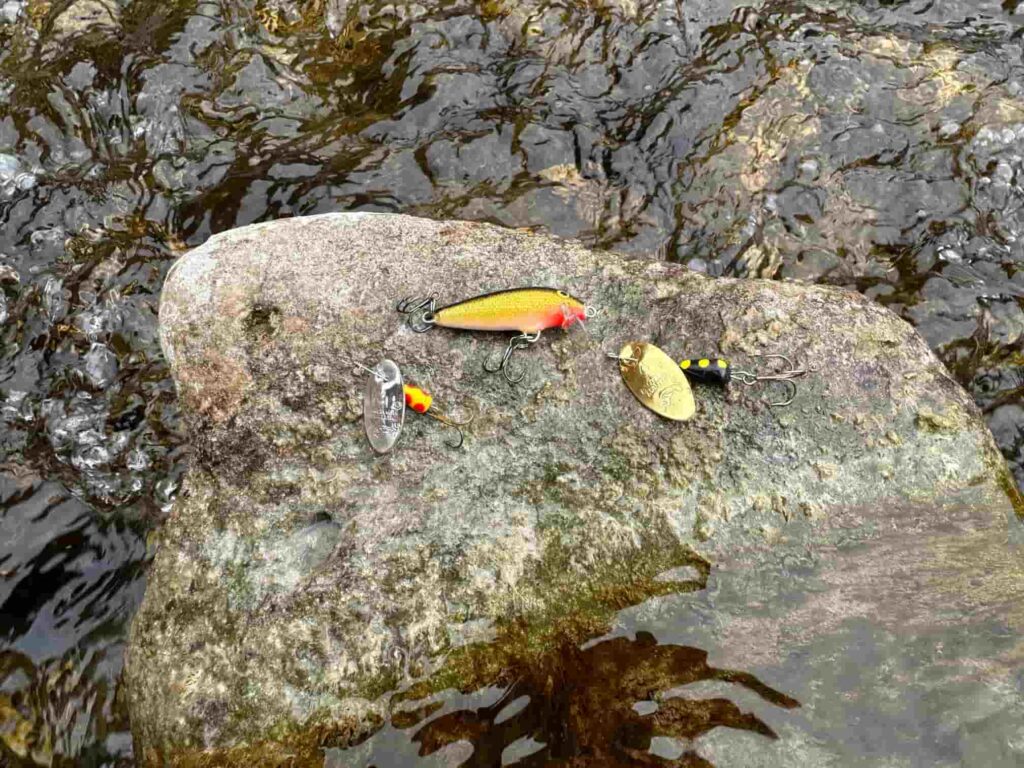
A common misconception is you need to have fly fishing gear to target stream trout. While it does make it easier in some conditions, early spring is one time of year where lures on an ultra-light or light spinning setup can be very effective. Inline spinners from Panther Martin or Mepp’s with gold or silver blades create a ton of flash and vibration that aggressive trout can’t ignore. Depending on the size of the trout, #4 and #6 sized spinners will catch the widest range of sizes. Original floating Rapala’s are a great early spring option especially in streams that have larger trout. A more subtle option is a small jig with a 2.5 to 3-inch paddle tail swimbait.
Waders are another piece of gear that will be vital to success. You don’t have to spend hundreds of dollars on the best quality. You can find solid waders in the $125 to $150 range that will get you in the water, keeping you warm and dry. If it becomes something you love doing, you can always upgrade down the road. A fly fishing net is the final piece of gear that will make it easier to land trout. They are notorious fighters and not the easiest to handle. Fly fishing nets are typically attached to retractable lanyards and have rubber netting which is also safer for the fish.
Where to Fish Once You Get to the Trout Stream
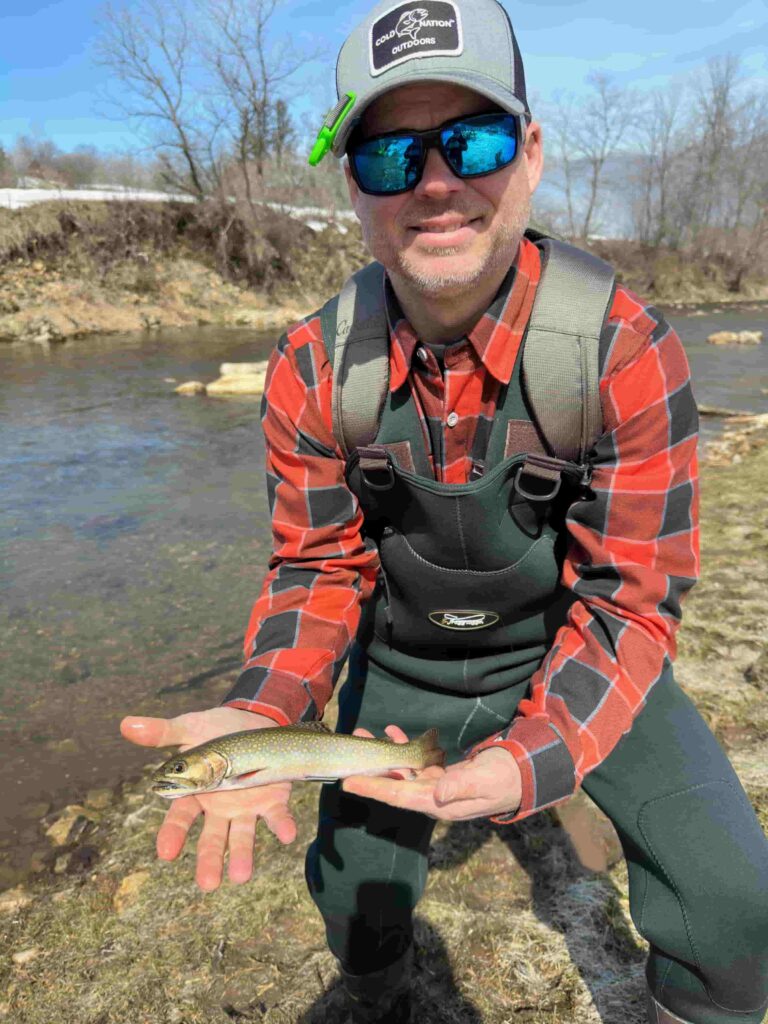
Much like fishing for river walleye, trout set up on the outside of current seams. Wherever fast-moving water meets slower water you will find trout waiting for that current to bring them food. The ends of riffles and rapids, the upstream edges of deep pools, and deeper trenches are all areas where trout will congregate. Slack water behind current breaks such as boulders or lay downs can also hold trout. Bridges are another good place to start as they provide trout with shade and protection from predators.
After the long Midwest ice fishing season, the scenery, sounds, and smells while trout fishing are incredibly refreshing and can help get us to the open water season. The next time you find yourself sitting in your garage sorting tackle, wishing you were on the boat, head to the Driftless Region, and make some casts.