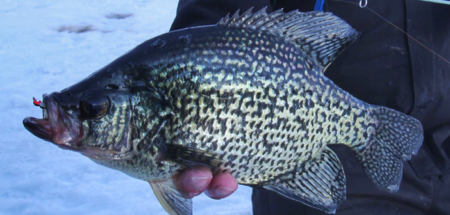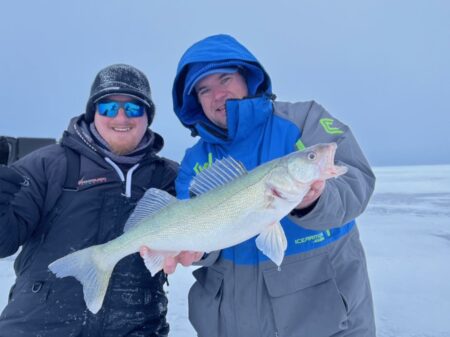
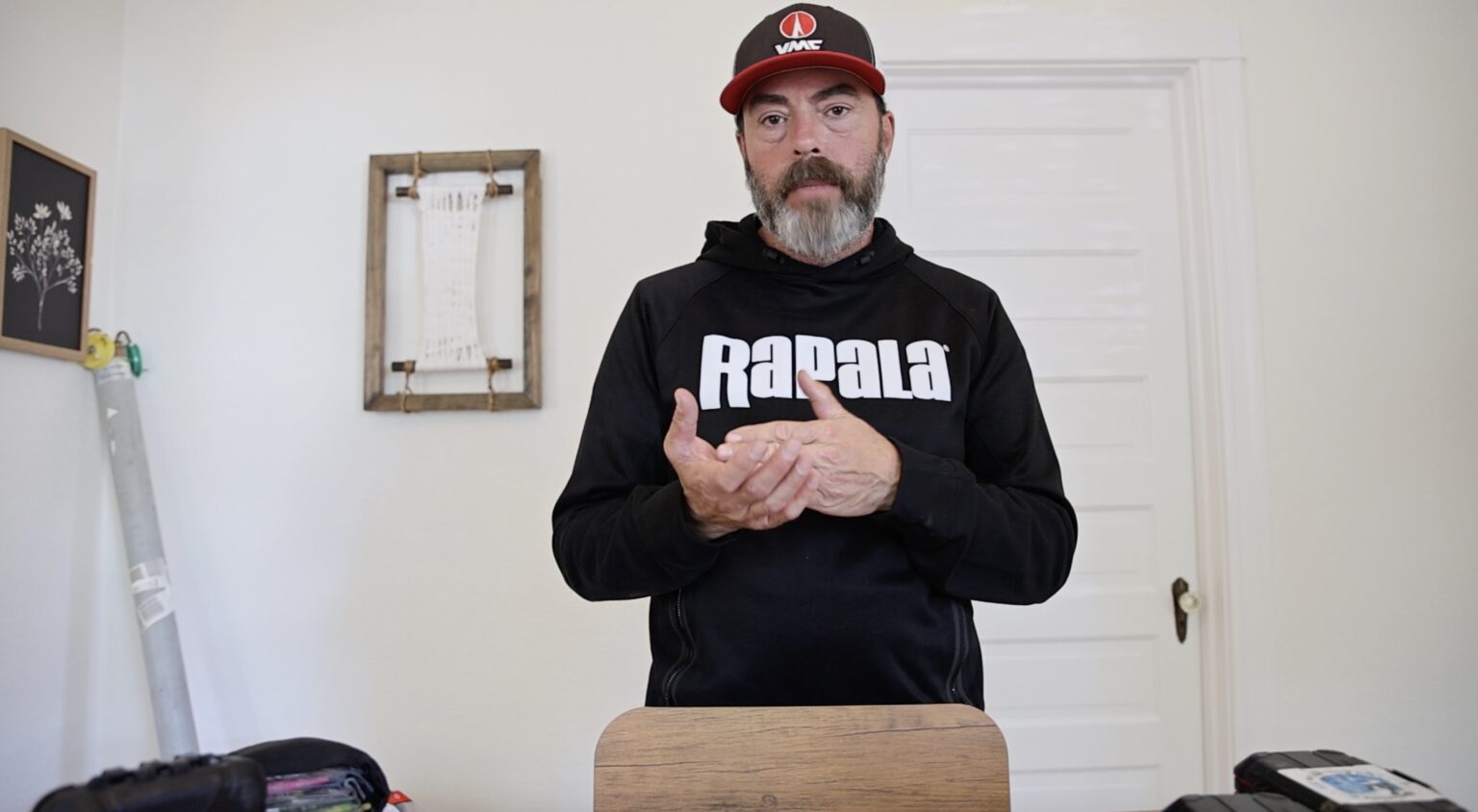
Tony Boshold is a Chicago-land and Southeast Wisconsin’s premier ice fishing guide. He is a two-time North American Ice Fishing Champion (NAIFC ’05, ’13) and Gold Medalist with the USA Iceteam in ’10. He’s most well-known for participating in panfish tournaments all over the world since ‘01. We asked Boshold to share his top tips for success searching for panfish throughout the season from regional differences to first ice and beyond.
First Ice Hotspots: Northern vs. Southern Ice Belt
Come early ice, a lot of fish come back into the shallows after the turnover, so those shallow backwaters and bays should be your first ice hotspots about anywhere you go. But if you do get a deeper portion of water locked up, there are multiple bites out there to be found as well. You might even have a shallow bite and a deep bite at the same time. The further north you go, there’s a lot more of a deeper water bite at early ice.
In the southern part of the ice belt, it’s hard to get to those deeper locations since there isn’t the same setup of ice with full freeze and thaw cycles happening throughout the ice season. In the southern ice belt, there will often be a first ice period around the same time that the north gets it in November. After a few days or a week, the south will generally lose that ice and won’t get any back until the holidays. Then, that ice might disappear and it may not come back till the end of January. Even if that ice held the entire time, the south still gets plenty of snow in between that thaws out, flows, and oxygenates the shallows. This constant oxygenation often contributes to finding a good shallow ice bite throughout the entire season.
In contrast, further north as you get later into the season, the shallow backwaters and bays get covered up in banks of snow that give no light penetration, so you have weeds start to die off. When the weeds are dying, they gas up and the fish can’t stay. There’s not enough oxygen, so the fish move our to deeper basins or suspend off of the flats over deep water.
Common Patterns of Suspended Panfish
Especially in the northern ice belt, you’ll find a lot of shantytowns setup over deeper water. Some for walleye and plenty for crappies. The shantytown lights will all come on about the same time on the weekends to hook into a few fish as they come through early and late in the day, sometimes even overnight. In the middle of the day, however, consider that these fish have to transition from somewhere. A lot of times if you have deep, suspended fish, they’ll suspend off of a break or a point to intercept the flats that are at that same depth. Let’s say you have fish rolling through the deep water suspended at 15 feet down. Look for a nearby flat that 15 feet deep where they can come up to feed or even a weed edge that they’re coming up into. If they’re 10 feet down, they’re generally moving into weeds during the daytime and then move out with a group to the deep water in the evenings. Many tournaments that Boshold has won have been at a turn on a point that meets a deep basin. Being able to read these locations on a map and duplicate them across a lake will help you move away from the groups on onto your own fish that haven’t been pressured.
Searching Throughout the Season: Where to Start
When searching for fish throughout the season, especially on a new lake, Boshold’s best advice is to not get glued to the groups or shantytowns, but use them as a starting point. Find out what they’re on and what they’re doing, and then pattern the fish yourself. Start searching just outside of these groups and check the areas moving beyond. Zig-zag your way in and out of the edge of the group, cover more area, and keep moving outward until you stop seeing fish to figure out which way they’re moving. Boshold has won a lot of tournament money just by moving away from the groups to find daytime patterns. If you keep moving outward, you might find an undiscovered piece of structure or funnel that they’re getting pushed to and staying away from the pressure.