Efficiency is key when chasing nomadic basin crappies. From the rod and reel set up, to the flasher, to the forward-facing sonar, to the machine set up,
It’s key to be as mobile as possible. For Matt Klug, this means mounting his forward-facing sonar on his machine. They’re extremely efficient for finding fish but very heavy, so keeping it on the machine can make it that much easier to check new locations. Once you identify their general location, the best thing you can do is work as a team. This way, you can use forward facing sonar to point someone in the right direction and help them make small moves to get right on top of fish instead of having to run back and forth between your forward facing sonar and drilling holes with your Vexilar on your own. Once they punch through with their auger, you can usually see that on the forward facing sonar as well to check if their distance is right and can then guide them in even closer before they drop a flasher down to make sure they’re on the fish.
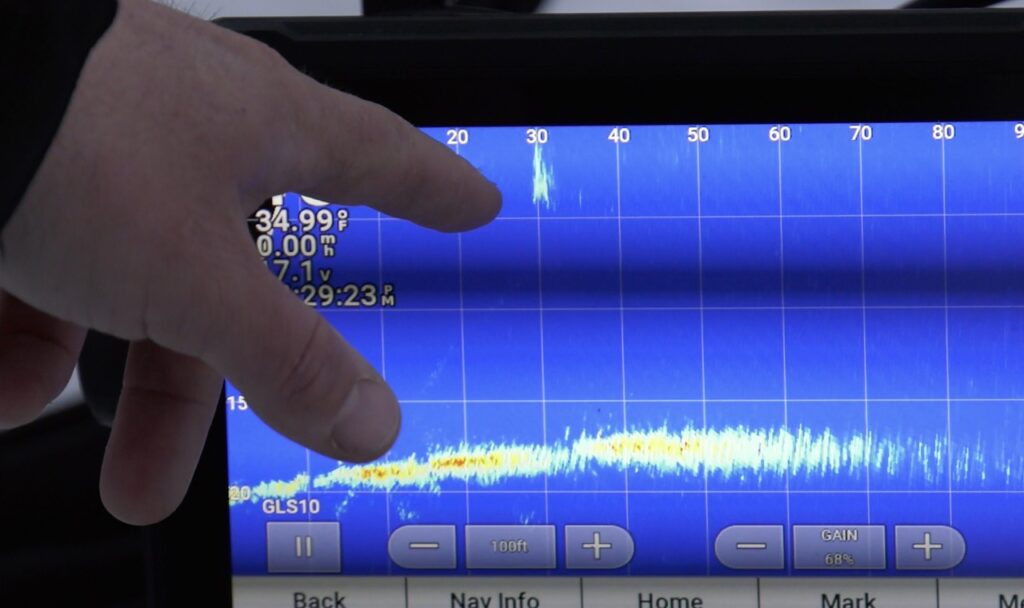
A hundred foot range is a good general distance for most basin situations. When fishing shallower than 15 feet, you won’t be able to see as much so there’s no reason to look quite as far out. In these situations, bump that down to 50 or 60 feet for better clarity. You might even be able to see fish in the weeds as well at that range/depth.
Forward facing sonar is extremely efficient for getting on suspended crappies, especially when working in a team. Just make sure to adjust your settings to get as clear a picture as you can and then play with your ranges. If you want to prevent your unit from adjusting and jumping around depths and distances as much, you can set them manually to keep your picture more consistent.